
Google has released Genie 3 or more precisely, Google DeepMind has pushed its world model line forward again and started showing what this can look like as a product-y prototype (Project Genie).
you type a simple prompt, and it can generate a real-time, explorable environment. You move, it responds, the scene keeps going. It’s not a finished game engine thing, but it is a real step in the direction of interactive world generation.
And of course the internet immediately jumped to metaverse is back.
That reaction makes sense emotionally… but we should slow down for a second, because we’ve been here before.

Remember when everything was “the metaverse”?
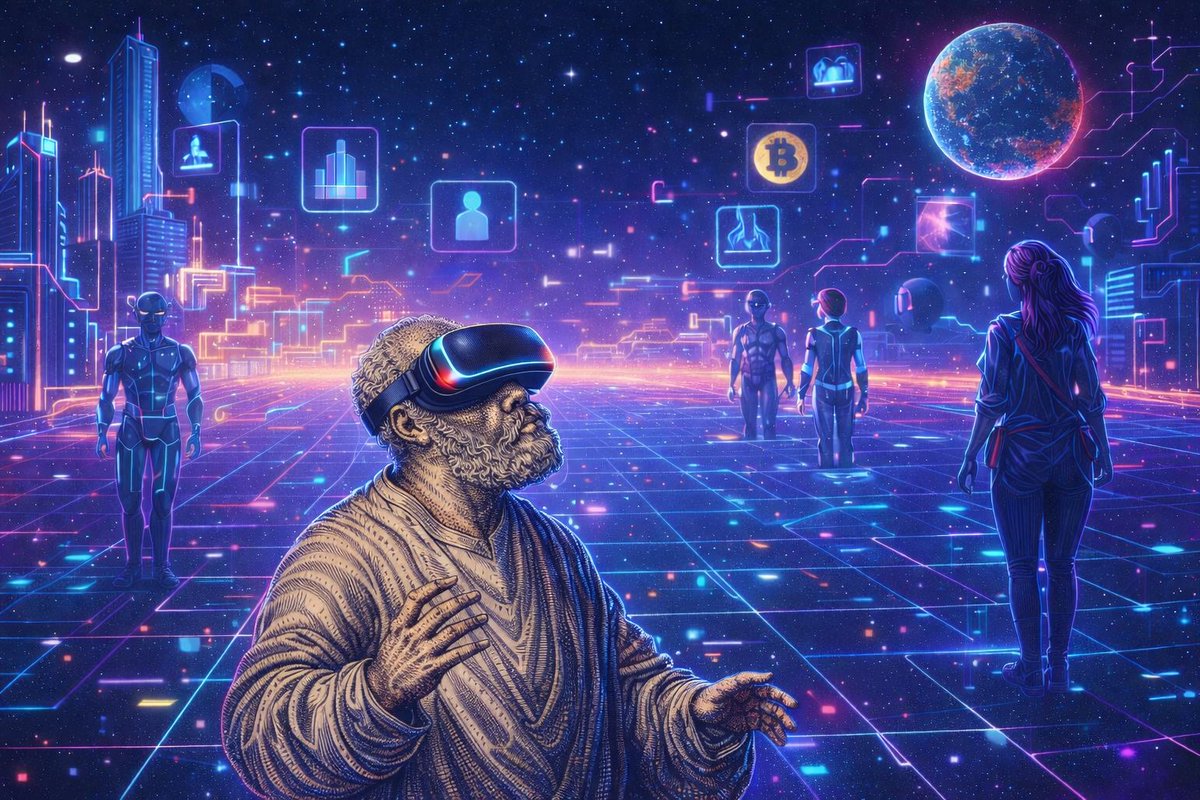
Metaverse, at its core, was the idea that the internet would stop being flat pages and become a 3D, persistent, social space a place you actually exist in with an avatar. You’d hang out, work, play games, attend events, own digital stuff, maybe even carry your identity and items across platforms.
It wasn’t a new idea, but it exploded into mainstream hype when a few waves hit at the same time:
- VR/AR hype was peaking
- the pandemic pushed people into online social life
- crypto/NFTs made “digital ownership” feel like the missing piece
- and Meta (Facebook) basically poured gasoline on it by rebranding and shouting this is the future nonstop
Then came the wild era: virtual land sales, brands buying plots, “metaverse real estate” headlines, huge funding rounds. For a while it felt like everyone had to have a metaverse strategy.
So why did it fade so fast?
- The products didn’t match the promise. A lot of experiences felt empty or clunky.
- Hardware friction stayed real. VR headsets never became a casual daily habit for most people.
- Speculation got ahead of utility. When the crypto/NFT wave cooled, a lot of the metaverse narrative collapsed with it.
- Costs were massive, payoff was unclear. Companies burned serious money without finding a sticky mainstream use case.
Did metaverse die? Not really. It just stopped being the magical umbrella word that could justify anything. The surviving pieces are the ones that were always real: social game worlds, creator platforms, online communities that people actually return to.
How old school metaverse building actually worked
Back then, saying “we’re building a metaverse” often meant you were trying to build something closer to:
a multiplayer game + social network + creator platform + economy + moderation system
…all at once.
A prototype world is one thing. A persistent world that people live in is another.
If you were building it the traditional way, you had to cover at least these pillars:
1) The client (graphics, world, interaction)
Usually Unity or Unreal. If VR was involved, you were also dealing with XR pipelines, controller input, comfort issues, locomotion, and performance pain.
You had to think about: streaming the world in chunks, level of detail (LOD), asset management, avatars (animation, customization, clothing, emotes)...
2) Multiplayer networking
This is where things stop being fun quickly:
- matchmaking and instancing (shards, rooms, world copies)
- syncing player states
- latency smoothing and prediction
- security / anti-cheat / abuse prevention
Language wise, it was never about one magic stack. You’d see C#, C++, Java, Go… whatever fit the team and the infrastructure.
3) Persistence (the part everyone underestimates)
The moment users expect the world to remember them, you need:
identity, inventory, world state, logs / audits, reliable data storage and caching...
Basically: you’re building a platform, not just a game.
4) User-generated content (UGC) and tools
If you want scale, you need creators.
But creators require tools. Tools require safety rails. An editor (or modding system), scripting, moderation pipelines, content validation, copyright and abuse handling....
This is where a lot of projects quietly bled out.
5) Economy + trust + safety
If money is involved, everything gets harder: payments, fraud, chargebacks, marketplace integrity...
If crypto is involved, multiply the risk by ten because now you also need user education and scam defense, not just “features.”
That’s why “metaverse” was always less about one big idea and more about platform engineering at a brutal scale.
Could end users build their own metaverse?
Depends what you mean by build.
Option A: build a world inside an existing platform
This is the sane path. Roblox, VRChat-style ecosystems, even Minecraft modded servers that’s where the metaverse feeling was most real. You’re building an experience on top of a working infrastructure.
Option B: build your own platform from scratch
That’s not a fun world project. That’s building an MMO + social platform + economy + tools + moderation. For a small team, it’s a mountain.
And another important point:
If you build one single world, that’s usually not what people meant by metaverse. That’s a virtual world or an online game. Metaverse was the bigger claim: persistence, social graph, scale, creation, and ideally some kind of portability across experiences.
Genie 3 looks insane… but it’s not a full world yet
This is where the social media exaggeration starts.
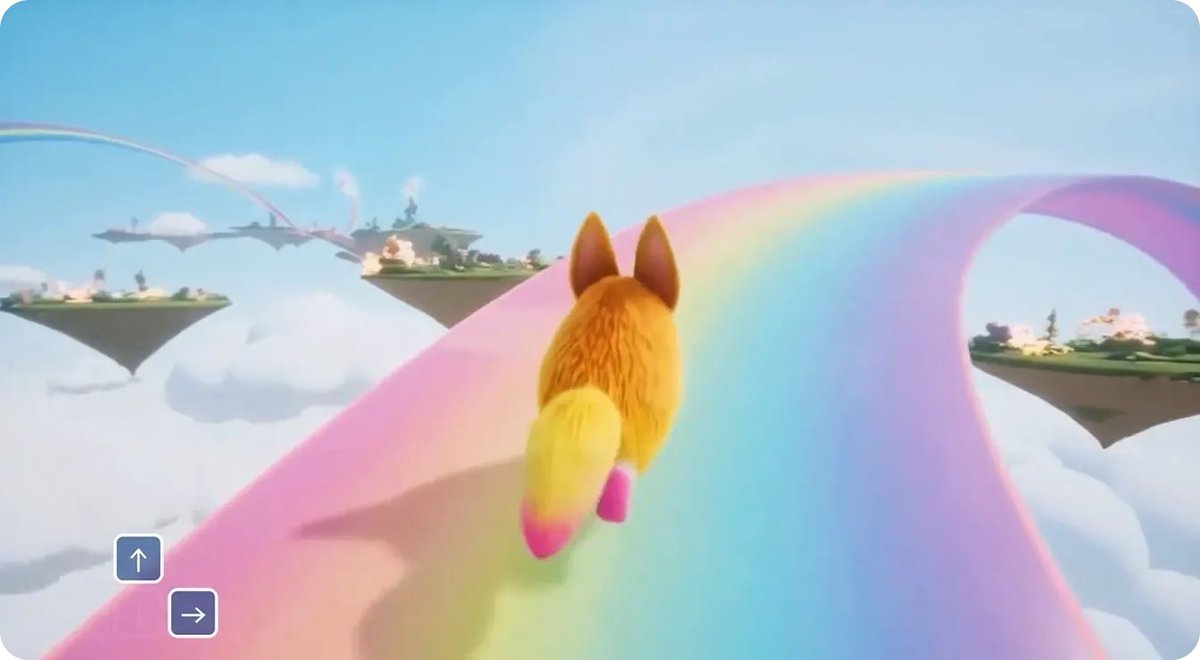
Genie 3 is genuinely impressive because it can create interactive, real time scenes that respond as you move through them. But people instantly translate that into “prompt → AAA game.”
That’s not what this is right now.
At the current stage, what you get is closer to:
- a navigable scene flow
- a “world continuation” model
- a prototype environment generator
Not a complete game world with robust physics, deep systems, networking, content pipelines, debugging tools, and a stable long term state.
Creators on social media will obviously frame it like the future arrived overnight because that’s what gets clicks.
Why people mention data centers when they talk about 4K 60fps worlds
Here’s the reality check.
If today’s demos are around the 720p / ~24fps realm, jumping to: 4K - 60fps, long duration consistency (hours, not minutes), multiple players / multiple agents, stable game logic and physics
…that’s not a small step. Even the raw output load balloons fast:
- 720p is under 1 megapixel
- 4K is over 8 megapixels (roughly 9x)
- 24fps → 60fps is about 2.5x
Just those two changes already push you into a different universe of compute. And then you add the real hard parts: persistence, multiplayer, state correctness, latency constraints. That’s why, to do “4K 60fps world generation” in this style at scale, you start thinking in terms of clusters and data center-level infrastructure, not a cute local demo.
So yes: what we see today is impressive but it’s not ready made metaverse.
Still… this can absolutely be a starting point
The best comparison is LLMs.
Early LLMs could write a paragraph and everyone went “cool, but…”
Then the pace of progress kicked in: context windows expanded, tool use appeared, coding got better, multimodal became real, agent workflows started to matter...
World models could follow a similar arc.
What matters in Genie 3 isn’t it makes a game.
It’s that it can:
- keep a world going
- respond to interaction
- maintain short-term consistency
- generate environments on the fly
That’s the kind of base capability that can grow quickly when the ecosystem builds around it.
“This won’t build full games by itself”… but combined with game engines, it changes everything
Here’s the key distinction:
Genie 3 is not a game engine.
A game engine is rules, determinism, physics, state management, networking, tooling, builds, profiling, debugging… the unglamorous stuff.
But Genie 3 can become a powerful content layer.
A more realistic future looks like this:
- you prompt your way into the visual style + environment drafts
- agents help break tasks down: UI, inventory, quest flow, combat systems
- Unity/Unreal handles the real game logic and structure
- the world model accelerates prototyping and content generation
So the story isn’t “prompt to finished game.”
It’s “prompt to your production pipeline gets faster.”
And that’s the part that could revive the old build your own world dream but in a much more practical way. In 2021 it was “land + hype + speculation.” This time it could be “world creation becomes cheap enough that normal people can actually ship experiences.”
Which is exactly why you’re hearing the phrase again:
metaverse might come back.
It can but only if the outcome isn’t buzzwords.
The only metric that will matter is the boring one: do people actually come back every day and spend time there?
The metaverse era didn’t fail because the idea was evil. It failed because the timeline was fantasy and the products didn’t earn the hype.
Genie 3 feels different in one important way: it’s a concrete capability. It has limits, yes, and those limits are real but it’s also the kind of foundational tech that can snowball once it’s paired with engines, tools, and agents.
So no, we’re not magically getting a complete metaverse tomorrow.
But we might be watching the earliest version of something that, with enough iteration, makes build your own world feel normal again.
Originally published on X · 2026-02-04
 Post on X
 Telegram