
I got rich with Clawdbot hype: clickbait, real mechanics, and the real risk
Over the past few weeks, the same template has been circulating on X:
“I found this 2 days ago,” “I was gone for 3 weeks,” “$100–$500 a day,” “I won’t share a guide or they’ll take it down,” “turn on notifs and position here…”
Most of these posts aren’t trying to inform you, they’re trying to speed you up. And in crypto, speed usually means mistakes, and mistakes can be permanent. A clearer picture only shows up once you separate the clickbait layer from the tech itself: what Clawdbot (OpenClaw) actually is, why it went viral, what it can realistically be used for, how people are tying it to crypto, what recent security reports are warning about, what the “AI social network” experiment revealed, and where “making money” becomes plausible versus pure marketing.
The clickbait patterns that are everywhere right now
These are the classics the ones that should immediately trigger your this is probably marketing radar:
- Artificial scarcity: “I’m not sharing the guide, they’ll delete it.”
- Social guilt: “Everyone around you knew… they just didn’t tell you.”
- Pre-emptive innocence: “I’m not here for engagement, I barely tweet.”
- Vague proof: “I shared it in my Telegram group, most people made money.”
- Moral pressure: “Wake up! Don’t be the person who gets serious in January.”
- List-based steering: “Turn on notifs and position in these accounts/projects.”
The common goal isn’t education: it’s acceleration. And crypto punishes rushed decisions harder than almost any other niche.
What is Clawdbot (OpenClaw) and why did it spread so fast?
Clawdbot (later referred to as Moltbot and OpenClaw) didn’t go viral because it’s “another chatbot.” It blew up because it behaves like an agent: it can plan steps and call tools to actually do things working with files, a browser, messaging apps, and automation flows in a way that feels closer to “a junior operator” than “a text box.”
Where people genuinely say it helped tends to be surprisingly practical and boring (which is exactly why it sticks):
- Inbox work: sorting/labeling emails, cleaning clutter, drafting replies, sending messages.
- Calendar + coordination: scheduling, rescheduling, reminders, basic coordination: often through messaging interfaces.
- Travel routines: checking flights, tracking prices, even handling repetitive steps like check-in.
- Bureaucracy grind: chasing insurance paperwork, tracking a process, managing back-and-forth messaging.
- Research + light tech help: web research, shopping flows, and sometimes basic troubleshooting.
The growth curve was also unusually visible. The project jumped quickly to 100K+ stars on GitHub and drew massive traffic in a short window, with demos focused on exactly these “everyday but annoying” workflows.
One important distinction matters here: the agent idea is real and powerful. The “agents print money” storyline is usually a marketing layer stapled on top.
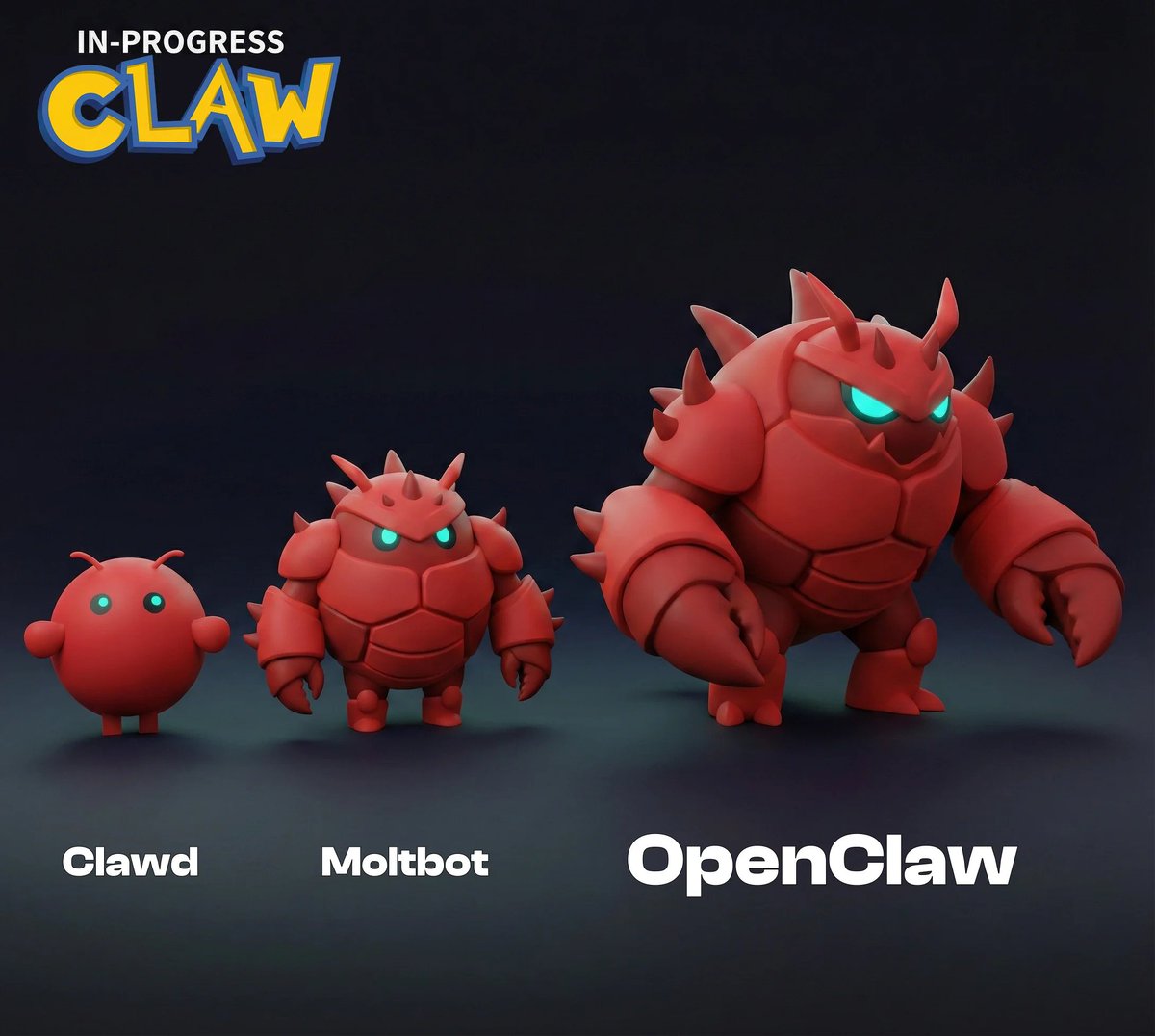
Why the name change mattered and what scammers did with it
The rapid name changes weren’t random. Trademark pressure involving Anthropic put “Clawdbot → Moltbot” on the table, and around the rebrand window there were reports of old social handles being briefly hijacked and quick platform intervention. That kind of transition period is basically a gift to scammers.
Once a name is in flux, the attack surface explodes. The most common scams that showed up after the rebrand were predictable:
- Handle sniping + “official update” links
Old handles drop, scammers grab them instantly, and post “update” links that route people to malware pages or fake airdrop sites. - Fake token launches (the “official token” illusion)
A coin gets launched using the project’s name, marketed as “the real token,” rapidly pumps on hype, and then collapses once the early insiders exit. - Typosquat domains + cloned repos
People searching “download moltbot/openclaw” get caught by lookalike domains or cloned repositories that build trust and then deliver something malicious. - “Wallet automation / trading helper” skills that are actually malware
“Skill marketplace” style ecosystems are perfect for this: a “crypto helper” plugin nudges users into running obfuscated terminal commands, installs an infostealer, and targets wallets, passwords, and session data.
Bottom line: the name change itself isn’t the problem. The problem is that the transition window lets scammers look “official” long enough to do damage and it accelerates the fake token + fake site + malicious plugin trifecta.
Potential: what can actually be done in a good scenario?
Strong use cases outside crypto
These are the areas where agents usually create real value because mistakes are reversible:
- Ops automation: pulling reports, preparing documents, managing form-heavy processes.
- Support + triage: classifying tickets, summarizing knowledge base entries, drafting responses.
- Dev workflows: issue analysis, PR descriptions, release notes, log scanning.
Here, an agent can be helpful precisely because you can review, roll back, correct, and iterate.
Where this intersects with crypto (and what’s real vs hype)
In crypto, the “agent” concept isn’t a magic money machine. It’s mainly a convenience layer that it reduces friction, automates steps, and sometimes exposes new incentive mechanics. In practice, three patterns have been showing up:
“Social-command trading” (trading bot / agent UI)
The goal is to reduce DEX actions to plain-language commands: “buy $10,” “sell,” “set a limit,” “bridge,” etc. Bankr has been positioned in this direction, using social surfaces (and sometimes CLI-style flows) to trigger transactions.
Is it safe?
The biggest risk often isn’t “the bot got hacked.” It’s user-facing execution risk:
- wrong token picked (ticker confusion),
- slippage mistakes,
- misread commands,
- approving the wrong transaction,
- signing in the wrong window at the wrong time.
Some projects even explicitly warn that there’s no security assurance or audit guarantee which makes “smart contract risk” very real, not theoretical.
Where’s the real potential?
In constrained setups: portfolio monitoring + alerts + human-approved execution. Fully automated retail trading tends to turn into “fast mistakes.”
“Agent-driven token creation” (launchpad + creator rewards economics)
With Clanker, the practical flow people talk about is: triggering ERC-20 deployment on Base through social commands, then using a “creator rewards” mechanic where trading activity can generate fees that may flow back to the creator under certain conditions.
Is it safe?
“LP locked = no rug” is not a safety guarantee. A lock may reduce certain rug paths, but it doesn’t remove:
- price manipulation,
- wash trading (fake volume),
- MEV games,
- contract/extension risk,
- integration bugs.
Also, “creator rewards” is marketed as “passive income,” but in reality it’s “income only if there’s volume,” and volume can be manufactured which is why this becomes a perfect clickbait factory.
Where’s the real potential?
Token creation has clearly been democratized. But “launching a token” isn’t value by itself. Value shows up when there’s an actual product, distribution, or community with substance. Without that, the default cycle is: fast launch → short hype → fade.
“Agent tokenization” (owning the agent narrative)
Virtuals Protocol frames the idea as “an agent is a digital business,” and tokens represent exposure to that agent’s activity. Their docs describe mechanisms like pairing liquidity with $VIRTUAL and agent creation economics.
Is it safe?
Beyond classic crypto risks, you’re also betting on whether the agent revenue model is real, whether demand lasts, and how liquidity behaves under stress. Even if the mechanism is documented, “revenue” often ends up depending on market conditions and ecosystem momentum.
Where’s the real potential?
If agents genuinely become services that earn payments (API/service revenue), tokenization could resemble a real stakeholder model. Right now, social media often blurs that line and treats “price movement” as “business success.”
The biggest risk: the bridge between agents and crypto is a premium target
Crypto makes mistakes expensive. Agents often run with broad permissions (local files + network access + command execution). Recent reports highlight exactly how “crypto-looking” skills/plugins can be abused especially those pushing obfuscated commands that lead to infostealers. That’s why “agent + trading” is one of the riskiest combos for non-technical users.
The safer practical approach
A more defensible setup usually looks like this:
- Read-only agent: monitors wallets/positions, generates alerts and reports doesn’t execute trades.
- Human-in-the-loop: suggests actions, simulates outcomes, summarizes risk user signs.
- Isolation: separate browser profile / VM + a separate hot wallet (never the main wallet).
- Allowlist: only interact with specific routers/contracts; no general-purpose shell control.
Under this frame, the potential stays real. The “fully automated money printer” narrative is where most people get burned.
The real red line: why these agents can be so dangerous
If you’re active in crypto, your computer is valuable:
- active browser sessions and cookies,
- wallet extensions and approval flows,
- exchange logins and email access,
- API keys even without seed phrases, still enough to cause damage.
That’s why a high-permission agent model becomes double-risk in crypto contexts. Security reports have focused on exactly this: malicious skills, supply-chain abuse, and infostealers spreading through plugin ecosystems. The more permission the agent has, the larger the blast radius.
The “AI social network” experiment: Moltbook and what it revealed
Part of the viral wave came from “agent-only social network” experiments like Moltbook the concept that only agents post while humans watch was provocative and catchy.
Reality hit quickly: humans started impersonating agents, verification broke down, and it became obvious how easy manipulation becomes when identity, incentives, and security aren’t solved. Coverage from The Verge and Wired highlighted how quickly the system could be gamed.
Two takeaways:
- Agent-to-agent interaction may be a genuine signal of where things are headed.
- Without robust verification, security, and incentives, “agent social” turns chaotic fast.
The “income models” people brag about on X: what are they usually based on?
The “I made $2600” / “$100–$500 daily” claims are usually some mix of:
- Creator rewards / fee-share
“There’s volume → fees exist → creator can claim a share.” Marketed as daily income, but if volume isn’t real or sustained, it collapses. - Early in, late out (exit liquidity)
The memecoin classic: early entrants profit; late entrants become liquidity. Losers rarely post screenshots. - Referrals + community commissions
“I shared it in my group” can mean affiliate/referral economics, coordinated volume, or just selective storytelling. - Per-transaction bot fees
Convenience layers often monetize through fees. People call it “platform rewards,” but the money source is frequently other users’ fees or late entrants paying up.
Why playing with “winning feelings” is harmful and the mouse trap
When creators push the “winning” emotion, people do two things:
- install fast,
- verify less.
With agents, especially in crypto, that’s a dangerous pairing. Copy-paste terminal installs and random skills in a high-permission environment are basically a minefield for anyone who isn’t technical.
The free cheese is in the mousetrap and that sentence is practically law whenever “daily income” is the promise.
How money is actually made with this tech (without fantasy)
If you remove the “what do I snipe today” mindset, real monetization paths exist:
- Productization: narrow, high-value agents for support, ops, reporting, workflows.
- Enterprise setups: isolation, policy/permission management, audit logs, secrets handling.
- Security layer: skill scanning, signed packages, allowlists, reputation systems.
- Training + consulting: helping teams adopt agents safely.
What the market seems to be signaling is simple: it doesn’t want “unrestricted agents.” It wants controlled, safe agents.
A minimal safety baseline (not a guide, a reflex)
- Test agents in an isolated environment: VM, separate user profile, separate browser.
- Use a separate hot wallet. Never connect your main wallet.
- Don’t paste opaque commands into a terminal. That’s a favorite supply-chain attack route.
- Treat the skill ecosystem like untrusted executables, not like a friendly package manager.
- Remember: open registries make publishing easy for everyone including malicious actors.
This is the beginning but you can’t play the future without understanding the present
The agentic AI trajectory is real and it’s maturing quickly. Peter Steinberger joining OpenAI and OpenClaw continuing under a foundation umbrella is one signal of that momentum.
But the current reality is also clear: the ecosystem is growing fast, bad actors are moving faster, and when you combine this with crypto, the risk multiplies.
The smart move is to invest in a security model, not hype: minimum permissions, isolation, verification, and a cool head when someone promises “easy money.”
One last thing worth saying plainly: most “profit” posts you see on social media aren’t written for your benefit. They’re written to farm clicks and attention or to use your emotions (FOMO, scarcity, regret, fear of being left behind) to push you into an action that benefits the creator indirectly.
Originally published on X · 2026-02-18
 Post on X
 Telegram