DeFi changes who is responsible.
Before yield, swaps or protocols, understand the shift: DeFi replaces institutional promises with code—and moves responsibility to you.
This article is conceptual. It is not an invitation to act.
It is preparation for understanding.
If you already understand what cryptocurrency is and how to use a wallet, DeFi is the next layer.
Many people enter DeFi because they hear about earning yield or passive income. Without understanding the system behind those words, users often take risks they do not fully comprehend.
For years, crypto was mostly about holding assets such as Bitcoin or Ethereum and speculating on price. That made sense in the early stages.
Today, blockchains host entire financial systems. Lending markets, decentralized exchanges, derivatives, stable assets, and automated liquidity pools now exist on chain. Crypto is no longer just about owning coins. It is about interacting with programmable financial infrastructure.
DeFi is not simply crypto with interest. It is a financial system built on smart contracts instead of banks. That structural difference changes who holds your funds, who enforces the rules, who carries the risk, and who absorbs the losses.
It represents a shift in responsibility.
Understanding this shift is essential. Without it, it is easy to misjudge risk before interacting with any DeFi protocol.
Lesson mapJump to a conceptExplore all 23 sections
Before You Touch DeFi: Three Mental Anchors
Before interacting with any DeFi protocol, understand three fundamental realities:
- There is no undo button.
- There is no guaranteed yield.
- There is no central authority to absorb your mistake.
If something goes wrong, responsibility does not shift upward. It remains with the user.
DeFi is not dangerous because it is decentralized.
It is demanding because it requires understanding.
Custody: Who Controls the Keys?
In traditional finance, institutions hold your funds on your behalf.
This is called custodial control.
Choose an option to begin.
In DeFi, you control your private keys. That means:
If you lose access to your wallet, no institution can restore it.
If you sign a malicious transaction, no one can reverse it.
Self custody gives freedom. It also removes safety nets.
This difference is one of the most important shifts when moving from traditional finance to decentralized finance.
Why DeFi Exists
Decentralized finance did not emerge in isolation.
After the 2008 global financial crisis, trust in traditional financial institutions declined significantly. Many individuals realized that centralized systems could fail while customers carried the consequences.
There is also a global financial access problem. Billions of people worldwide do not have reliable access to banking services, credit markets, or investment infrastructure.
Finally, the modern economy is global. Traditional banking systems remain fragmented by jurisdiction, regulation, and institutional barriers.
DeFi attempts to address these structural issues by building open, borderless financial infrastructure that anyone with an internet connection can access.
It does not eliminate risk. It changes how access and responsibility are structured.
What DeFi Stands For
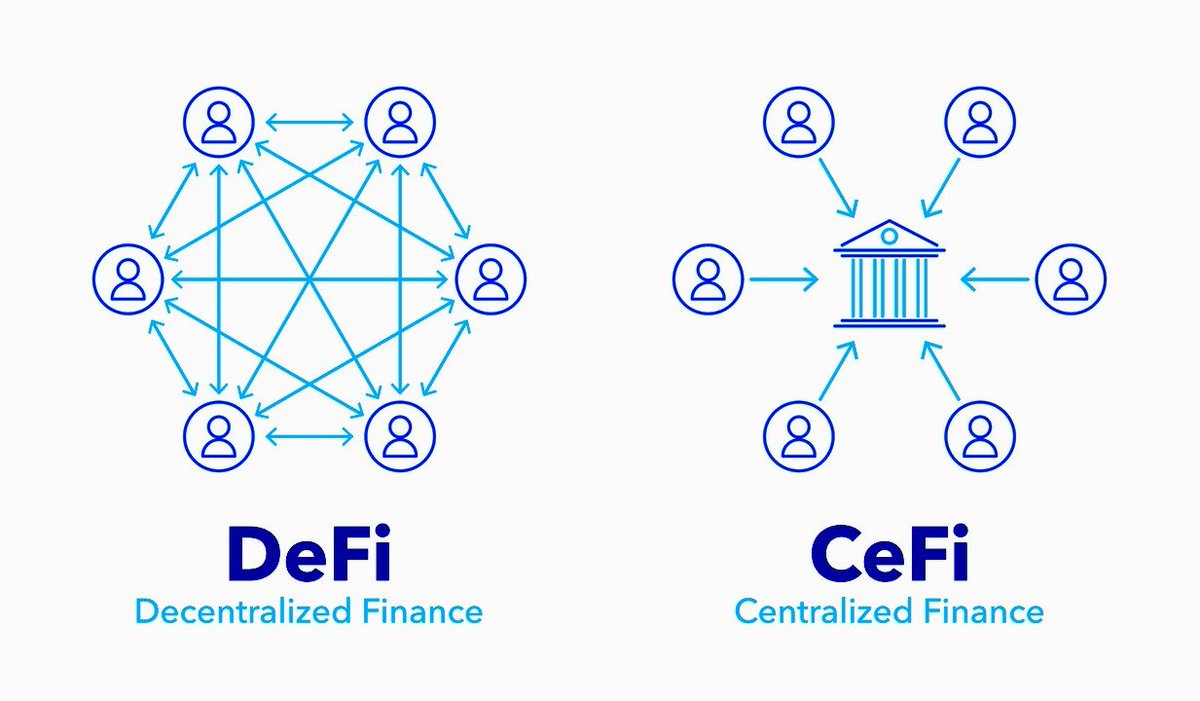
DeFi stands for Decentralized Finance.
Finance refers to borrowing, lending, trading, earning yield, and managing assets.
Decentralized means there is no central company or institution controlling the system.
In traditional finance:
A bank holds your money.
The bank keeps internal records.
The bank sets loan terms.
The bank can freeze accounts.
The bank assumes operational responsibility.
Many traditional financial systems still rely on legacy infrastructure developed decades ago. Changes to these systems often require institutional approval and centralized control.
In DeFi:
You hold your assets in your wallet.
Transactions are recorded on a blockchain.
Rules are enforced by smart contracts.
No single entity controls the system.
This is not just a technical change. It is a structural redistribution of responsibility.
Why DeFi Continues to Grow
Despite the risks and structural trade-offs, decentralized finance continues to expand.
Not because risk disappears.
But because the underlying architecture offers advantages that traditional systems struggle to replicate:
The same characteristics that increase responsibility also increase experimentation and efficiency.
DeFi grows not because it is perfect, but because it introduces a different model of financial infrastructure.
DeFi Is Software Interacting With Capital
DeFi is software interacting with capital.
If you would not deploy untested code in production, you should not deploy capital into systems you do not understand.
A protocol is not a company with customer support.
It is code executing logic.
That distinction matters.
Interface vs Protocol: What You Are Actually Using
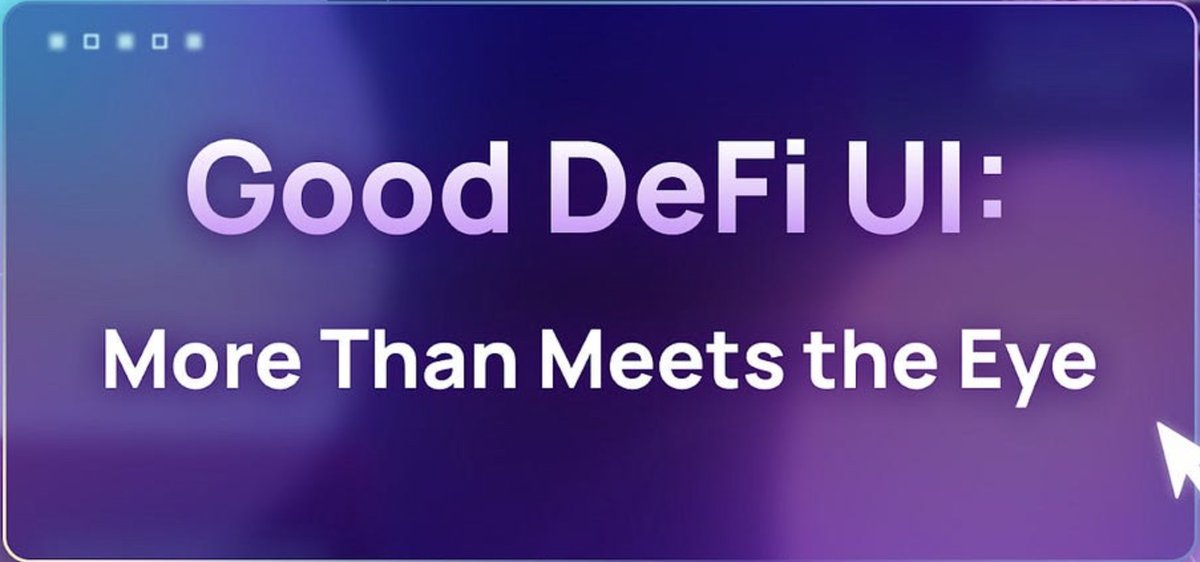
When you interact with a DeFi platform, you are not technically using a website.
The website is only an interface.
Choose an option to begin.
The actual financial logic lives inside smart contracts deployed on a blockchain.
If a website goes offline, the smart contracts may still exist and function. Advanced users can interact with them directly.
This distinction matters because:
The interface can be malicious even if the protocol is legitimate.
The protocol can remain functional even if the interface is compromised.
You are signing transactions that interact with code, not with a company.
Understanding this separation reduces phishing risk and clarifies what you are truly interacting with.
For this reason, you may often see boring UI concepts on the timeline. In DeFi, it's not the design but the underlying logic, operation, and code that are very important. So you should get involved in solid projects, not flashy ones.
What DeFi Is Not
DeFi is not a savings account.
It is not guaranteed yield.
It is not insured like a bank deposit.
It is not regulated in the same way as traditional finance.
It does not eliminate risk. It redistributes it.
Understanding what DeFi is not prevents unrealistic expectations.
Smart Contracts Replace Institutions
A smart contract is a program deployed on a blockchain that executes predefined rules automatically.
It follows simple logic:
For example:
If you deposit funds, interest accrues.
If collateral value falls below a threshold, liquidation occurs.
If you swap one token for another, pricing is calculated automatically.
There is no employee reviewing your request. The code enforces the rules exactly as written.
This creates transparency and automation. It also removes discretion.
Code Is Law: Automation Without Interpretation
In DeFi, the smart contract executes exactly what it was programmed to execute.
There is no interpretation.
There is no human discretion.
If the code contains a mistake, the mistake is executed.
If you send funds to the wrong address, the network does not correct it.
Automation removes human bias. It also removes human flexibility.
This is one of the fundamental trade-offs in decentralized finance.
What a Protocol Is
In DeFi, a protocol is a collection of smart contracts working together to provide a financial service.
A lending protocol enables deposits and borrowing.
A decentralized exchange enables token swaps.
A liquidity protocol distributes trading fees.
The protocol does not know your name, location, or identity. It interacts only with your wallet address.
Participation is permissionless. Responsibility is individual.
Composability: Why DeFi Feels Like Lego
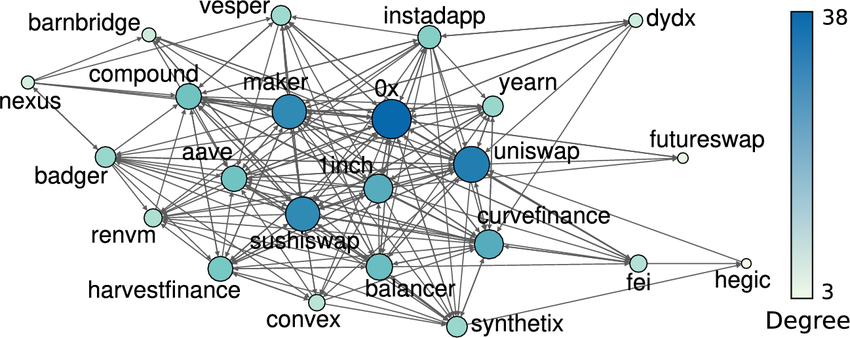
DeFi protocols can connect to each other.
A lending protocol can feed into a liquidity pool.
A liquidity pool can generate tokens that are used as collateral elsewhere.
This modular design is called composability.
It enables innovation. It also increases systemic complexity and interconnected risk.
Example: A Lending Protocol
Imagine you deposit one hundred dollars into a DeFi lending protocol.
You connect your wallet. The protocol only sees your wallet address, not your identity.
After you confirm the transaction:
- Your funds are added to a shared pool.
- Other users can borrow from that pool.
- Borrowers pay interest.
- Interest is automatically distributed to depositors.
- No bank employee approves this.
The smart contract simply follows its coded rules.
Where Yield Comes From
Yield is payment for providing capital and accepting risk.
In traditional banking, depositors provide capital. The bank lends that capital to borrowers. Borrowers pay interest, the bank keeps a margin, and depositors receive a portion.
In DeFi, the structure changes but the principle is similar. Users supply capital to protocols. Other users borrow from that capital or trade against it. Interest or transaction fees are then distributed to capital providers.
Yield comes from economic activity:
Borrowers paying interest.
Traders paying swap fees.
Token incentives funded by emissions, which may dilute value over time.
There is no hidden source of return.
When can yield fall?
If borrowing demand drops, yield drops.
If trading volume falls, fee income decreases.
If incentive programs end, rewards may disappear.
Yield is compensation for capital usage and risk exposure, not guaranteed income.
Technical Risk vs Economic Risk
Not all risk in DeFi is the same.
Technical risk refers to problems in code:
- Smart contract bugs
- Exploits
- Oracle failures
Economic risk refers to market structure:
- Volatility
- Liquidity collapse
- Incentive breakdown
A protocol can work perfectly from a technical perspective and still lose users money due to economic design.
Understanding this difference prevents false confidence.
Transparency Does Not Mean Safety
All transactions in DeFi are recorded on a public blockchain.
This means:
Choose an option to begin.
Balances are visible.
Smart contract code can often be reviewed.
Transaction history cannot be altered retroactively.
Open source does not mean audited.
Audited does not mean risk free.
Verified code does not eliminate economic risk.
However:
Transparency reduces information asymmetry. It does not eliminate uncertainty.
Time Horizon Matters
Short-term speculation and long-term infrastructure usage are not the same.
Many users approach DeFi with a trading mindset.
However, DeFi infrastructure was designed for capital efficiency, not short-term gambling.
Your time horizon influences your risk exposure.
Types of Risk in DeFi
Smart contract riskbugs or exploits in code
Market riskasset price volatility
Liquidity riskinability to exit efficiently
Stablecoin riskloss of peg
Governance riskprotocol rule changes
Systemic riskcascading failures across interconnected protocols
Understanding risk categories helps evaluate any protocol rationally.
Why Many People Lose Money in DeFi
Most losses in DeFi do not come from hacks.
They come from:
DeFi does not force users into risk.
Users voluntarily enter it without fully understanding the structure.
The system rewards knowledge and discipline more than enthusiasm.
Who Is Responsible in DeFi
In traditional finance, if something breaks, an institution is accountable.
In DeFi, if something breaks, the code executes as written.
There is no central customer support capable of reversing a transaction.
There is no deposit insurance.
If you sign a transaction, it is final.
Responsibility shifts from institution to user.
That shift defines decentralized finance.
Why People Choose DeFi
Open accessAnyone with a wallet can participate.
TransparencyActivity is publicly verifiable.
ProgrammabilityFinancial logic can be automated.
Global accessibilityNo geographic restrictions.
ComposabilityProtocols can interact with each other.
These advantages explain its growth despite the risks.
Common Beginner Mistakes
Risk awareness is foundational.
Next Steps
DeFi is a financial system built on smart contracts instead of banks.
You retain custody of your assets. Protocols enforce rules automatically through code. Yield comes from real economic activity such as borrowing and trading, not from guaranteed returns.
DeFi offers transparency, open access, and programmability. In exchange, it transfers responsibility and risk to the user.
Understanding the system must come before using it.
In the next article, we will explore how crypto wallets actually work, including private keys, seed phrases, and the security principles that protect your assets.
Continue the seriesPart 02 · How Crypto Wallets Actually Work →Originally published on X · 2026-02-23
 Post on X
 Telegram