Your wallet is your authority.
Coins do not live inside an app. A wallet manages the keys that prove who may authorize the next state change.
Private Keys, Seed Phrases, and the Meaning of Ownership
Before you enter DeFi, you must understand one thing: your wallet is not an app it is your authority.
In the previous article (https://x.com/ChemistDeFi/status/2025926922580930682), we established a fundamental shift:
In decentralized finance, responsibility moves from institutions to the user.
This article explains how that responsibility is technically enforced.
This is not a tutorial on how to install a wallet.
It is an explanation of what a wallet truly is.
Understanding wallets is understanding ownership.
Lesson mapBuild your wallet mental modelExplore all 30 sections
Before We Go Further: What “Ownership” Means in Crypto
In traditional finance, ownership is recorded in a database controlled by an institution.
If you log into a banking app, you are accessing records stored and maintained by the bank.
In crypto, ownership is not tied to identity.
It is tied to cryptographic control.
You do not “own” funds because your name is attached to them.
You own funds because you control the private key that can sign transactions from a specific address.
Ownership is not identity based.
It is key based.
A Wallet Does Not Store Coins
This is one of the most important concepts for beginners.
Your wallet does not store cryptocurrency.
Your assets exist on a blockchain.
A wallet stores private keys.
Those private keys allow you to:
- Sign transactions
- Move funds
- Approve smart contracts
- Interact with protocols
If you uninstall your wallet application, your funds do not disappear.
If you lose your private key, however, access is permanently lost.
The wallet is not a vault.
It is a key manager.
Private Key: The Core of Control
A private key is a long cryptographic number.
It is mathematically linked to:
- A public key
- A wallet address
The private key allows you to generate a digital signature.
That signature proves to the blockchain network that you are authorized to move funds associated with a specific address.
No one asks for your name.
The network verifies your signature.
Control equals the ability to produce a valid signature.
That is ownership.
Public Key and Wallet Address
From a private key, a public key is derived.
From the public key, a wallet address is derived.
You share your wallet address publicly.
You never share your private key.
Anyone can send funds to your address.
Only the private key holder can move them.
The blockchain does not recognize you as a person.
It recognizes cryptographic proof.
Simple Example
Imagine two people: Alice and Bob.
Alice shares her wallet address publicly so Bob can send her 1 ETH.
Bob does not need Alice’s name, email, or identity. He only needs her address.
Once the funds arrive, everyone on the blockchain can see that 1 ETH now belongs to that address.
However, only the person who holds the private key linked to that address can move that 1 ETH again.
If someone copies Alice’s address, they can view the balance.
But without the private key, they cannot produce a valid signature.
Visibility is public.
Control is private.
Address Reuse and Privacy
If you use the same address repeatedly, your entire transaction history becomes easy to trace.
Blockchains are transparent.
Anyone can analyze activity linked to a single address.
Hierarchical deterministic (HD) wallets allow you to generate new addresses from the same seed phrase.
This improves privacy but it does not create anonymity.
Privacy ≠ anonymity.
Even when you generate new addresses, on-chain analysis can sometimes connect them.
Understanding this prepares you for later topics like MEV, on-chain analysis, and blockchain data visibility.
Seed Phrase: The Root of Control
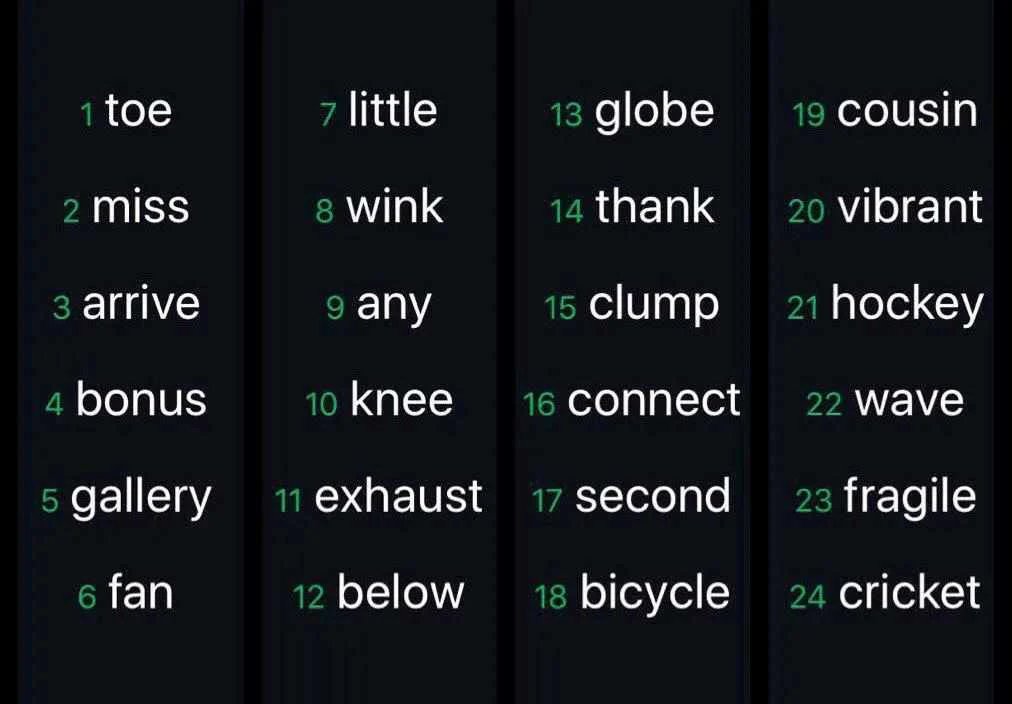
A seed phrase (also called a recovery phrase) is a set of words typically 12 or 24.
It is not your private key.
It is a master key that can regenerate your private keys.
Modern wallets use hierarchical deterministic (HD) structures.
Choose an option to begin.
This means:
One seed phrase can generate many private keys and addresses.
If you import your seed phrase into a new wallet application, your balances reappear.
Because the keys are mathematically regenerated.
The seed phrase is the root of control.
Whoever has it controls the wallet.
Address 1Private key B
Address 2Private key C
Address 3
Simple Example: How Seed Words Are Chosen
Seed phrases are not randomly picked dictionary words.
Most modern wallets follow a standard called BIP39.
In simple terms:
- Your wallet first generates a large random number (this is called entropy).
- That number is converted into a sequence of words from a fixed list of 2048 predefined words.
- A small checksum is added to detect typing mistakes.
This is why seed phrases look simple, but are extremely hard to guess.
The words themselves are not the security.
The randomness behind them is.
Twelve words already represent an astronomically large number of possible combinations.
That is why brute-forcing a properly generated seed phrase is practically impossible.
Examples of Seed Words
Because wallets often follow the BIP39 word list, the words you see come from a fixed vocabulary.
A few examples of words you might see in that list are:
- abandon
- ability
- access
- accident
- account
- across
A real seed phrase is typically 12 or 24 words long, for example:
“word1 word2 word3 … word12”
“Wallet Scanners” and Why They Don’t Work
You may see apps or videos claiming they can:
- generate random seed phrases
- “scan the blockchain”
- find wallets that already have funds
In theory, you could generate a random seed phrase and check whether the derived addresses have balances.
In practice, this is effectively impossible.
Why?
A 12-word seed phrase is built from a list of 2048 words.
That creates an astronomically large search space (roughly 2^128 possible seeds).
Even if a machine could check billions of seeds per second, it would still take longer than the age of the universe to meaningfully search that space.
So why do these “scanner” claims exist?
Because most real world theft does not come from breaking cryptography.
It comes from:
- tricking users into typing their seed phrase into a fake site
- stealing seed phrases from screenshots, cloud notes, or malware
- targeting wallets created with weak or broken randomness
In other words: the danger is not that someone can guess your seed.
The danger is that someone can get you to reveal it.
A Tiny Code-Like Illustration (Concept Only)
Here is a simplified idea of what a brute-force scanner would try to do:
repeat forever:
guess a random seed phrase
derive the first address
check if it has a balance
This looks simple.
But the number of possible guesses is so large that “repeat forever” is not a joke it is literally what it would require.
That is why properly generated seed phrases are safe from guessing attacks.
What they are not safe from is human mistakes.
Do All Wallets Use Seed Phrases?
Not all wallets work the same way.
| Model | Signing authority | Recovery path |
|---|---|---|
| Seed-based wallet | User | Recovery phrase |
| Custodial wallet | Provider | Provider account process |
| Smart-contract wallet | Configured policy | Guardians or recovery modules |
| Single-key wallet | User | Private-key backup only |
Most modern non-custodial wallets use a seed phrase (usually following BIP39) to generate private keys.
However, there are important variations:
Single-key wallets (older style):
Some early wallets generated just one private key without a seed phrase. If that key was lost, the wallet was permanently lost.
Custodial wallets:
Exchanges and custodial platforms do not give you a seed phrase at all. They manage private keys on your behalf.
Smart contract wallets / account abstraction wallets:
Some newer wallets use smart contracts instead of a single private key. They may support recovery through guardians, social recovery, or multi-signature setups.
MPC (Multi-Party Computation) wallets:
Some wallets split key control across multiple devices or servers, so no single full private key exists in one place.
So while seed phrases are common, they are not universal.
What matters is this:
If you control the signing authority, you control the funds.
How that control is implemented can vary.
Hierarchical Deterministic Wallets and Derivation Paths
This sounds complex, but the idea is simple.
Think of your seed phrase as a master tree.
From that one seed, your wallet can create many private keys.
From each private key, it can create many addresses.
Why does this matter?
Because your wallet does not use just one address forever.
It can generate new addresses when needed all still controlled by the same seed phrase.
Now, what is a derivation path?
It is simply a rule your wallet follows to decide:
- which branch of the tree to use
- which address to generate next
Different wallet apps sometimes follow slightly different rules.
So if you import your seed phrase into another wallet and your balance does not immediately appear, it does not mean your funds are gone.
It may just be looking at a different branch of the same tree.
The seed phrase is the root.
Addresses are branches.
All of them are still controlled by the same underlying master key.
Understanding this prevents unnecessary panic.
Let’s Clarify the Core Terms
Before moving forward, let’s simplify the most important concepts:
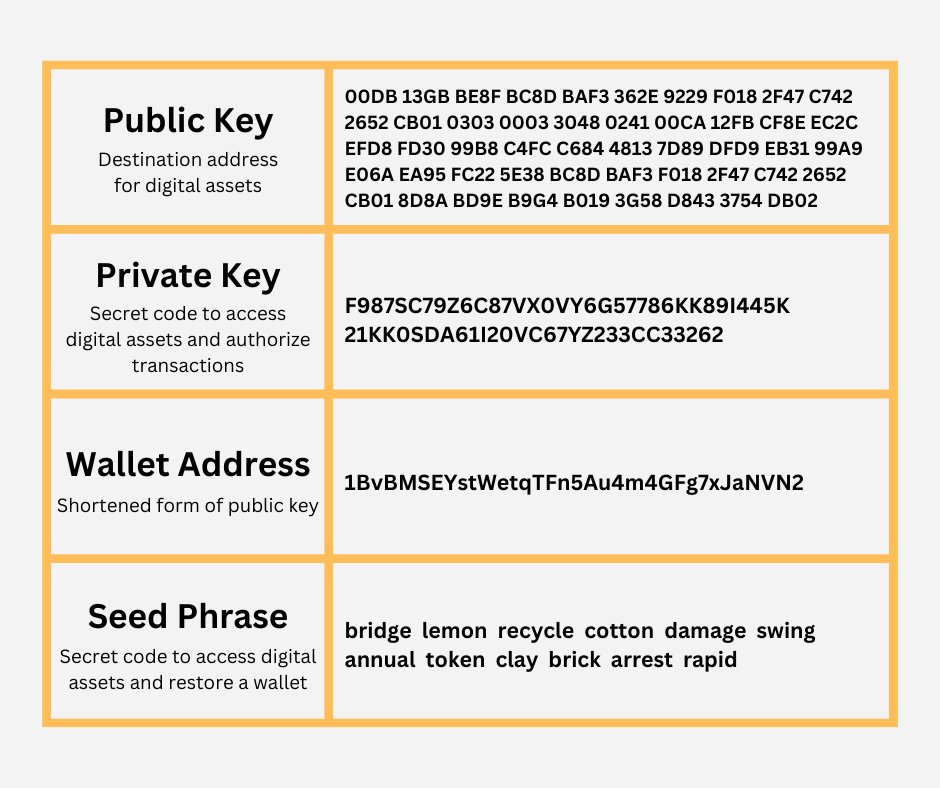
Seed Phrase
Think of this as the master recovery code.
It can recreate all your private keys.
Example: If your wallet app is deleted, the seed phrase restores everything.
Private Key
This is the secret number that gives you control.
It allows you to sign transactions.
Example: It is like the invisible signature stamp that proves “this is mine.”
Public Key
This is mathematically created from the private key.
It helps the network verify your signatures.
You can think of it as the verification layer.
Wallet Address
This is created from the public key.
It is what you share with others to receive funds.
Example: It is like your bank account number.
Here is the full chain in simple order:
Seed Phrase → Private Keys → Public Keys → Wallet Addresses
The seed controls the private keys. The private key creates valid signatures. The public key verifies them. The address is where funds are sent.
Control always starts with the seed or private key.
If someone has those, they have the wallet.
Custodial vs Non-Custodial
In a custodial system:
| Custodial | Non-custodial | |
|---|---|---|
| Key holder | Company | You |
| Recovery | Support process | Your backup |
| Transaction signer | Company | You |
| Main trade-off | Counterparty control | Personal responsibility |
- A company holds the private keys
- You log in with a password
- The company signs transactions on your behalf
In a non-custodial system:
- You hold the private keys
- You sign transactions directly
If you forget your exchange password, support can help.
If you lose your seed phrase, no one can.
This is the structural difference between convenience and sovereignty.
Is This Just Modern Finance Again?
If a crypto application holds your private keys for you, structurally it begins to resemble traditional finance.
Why?
Because:
- You log in with a username and password
- The company controls the signing authority
- The company can freeze, restrict, or reverse access
In that setup, you are trusting an institution again.
The blockchain may still be used underneath.
But control is centralized.
This does not automatically make custodial services "bad." They can offer convenience, recovery options, and customer support.
However, it does mean you are no longer operating under the pure self-custody model of decentralized finance.
The key distinction is not whether something uses crypto.
The key distinction is: who controls the private keys?
A Wallet Is Not an Account
An exchange account works like this:
- Username
- Password
- Company-controlled database
A wallet works like this:
- Private key
- Public key
- Blockchain verification
In an exchange system, the company updates balances internally.
In a wallet system, the blockchain updates balances only after verifying your signature.
One is access-based.
The other is key-based.
Confusing the two leads to dangerous assumptions about recovery and control.
What Happens When You "Connect" Your Wallet?
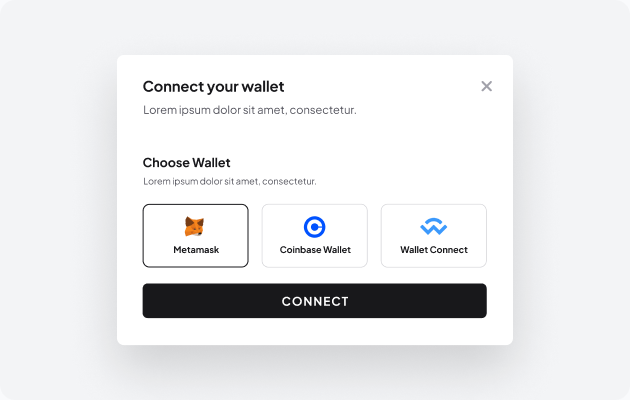
When you connect your wallet to a website, you are not sending funds.
You are allowing the site to:
Choose an option to begin.
- See your public address
- Request signatures
Connection does not move assets.
Signing does.
Many beginners assume "connect" means funds are immediately at risk.
In reality, risk begins when you approve or sign something.
Connection = visibility.
Signature = permission.
What Does “Signing” Actually Mean?
When you click “Confirm” in a wallet, you are signing a message.
- Wallet builds the instruction
- Your private key creates a signature
- The network verifies the proof
- Valid logic executes
That signature says:
“I authorize this transaction.”
The network verifies that signature against your public key.
If valid, the transaction executes.
The network does not judge intent.
It verifies cryptography.
Understanding what you sign is essential.
What You Actually Sign in DeFi
A wallet is not just a tool for sending funds.
It is a permission engine for smart contracts.
In DeFi, you do not simply "send money."
You authorize actions.
Here are the most common things you sign:
- Token transfer – moving assets from one address to another
- Contract interaction – calling a function inside a smart contract
- Approval – granting a contract permission to spend your tokens
- Message authentication – proving wallet ownership without moving funds
- Governance vote – voting in a DAO or protocol decision
Every swap, every lending action, every liquidity deposit, every bridge transaction all begin as a signature.
Your wallet is not just a vault.
It is a programmable permission interface.
In DeFi, Risk Begins as Signature Risk
Most financial risk in decentralized finance starts at the moment of signing.
Before funds move. Before yield is earned. Before profit or loss.
It begins with permission.
The Three Types of Wallet Risk
- Key Compromise
Someone gains access to your seed phrase or private key. - Malicious Contract Approval
You approve a contract that later drains funds. - Signing Something You Don’t Understand
You authorize a transaction without understanding what it does.
In DeFi, many later problems exploits, rugs, infinite allowance abuse begin with a signature that granted permission.
Understanding this shifts your mindset from:
"Is this protocol safe?"
to:
"What exactly am I authorizing right now?"
Message Signing vs Transaction Signing
It is important to clearly separate these two concepts.
Choose an option to begin.
Transaction = state change.
Message signing = authentication.
| Message signature | Transaction signature | |
|---|---|---|
| Typical purpose | Authentication | State change |
| Direct network execution | Usually no | Yes |
| User question | What am I proving? | What will change? |
Not all signatures move funds.
Sometimes a platform asks you to sign a message to prove ownership of your wallet.
This does not spend assets.
However, some malicious interfaces disguise transactions as harmless signatures.
Always read what you are approving.
Signing is not a formality.
It is permission.
Nonce and Transaction Ordering (Micro Introduction)
Every transaction from your wallet has a sequence number called a nonce.
The nonce ensures transactions are processed in the correct order.
It also prevents replay attacks on the same network.
Signatures are unique per transaction and per chain, helping prevent replay on that network.
Not all signatures move funds.
Sometimes a platform asks you to sign a message to prove ownership of your wallet.
This does not spend assets.
However, some malicious interfaces disguise transactions as harmless signatures.
Always read what you are approving.
Signing is not a formality.
It is permission.
The Hidden Risk of Infinite Approvals
When you interact with DeFi protocols, you often approve a smart contract to spend your tokens.
Some interfaces offer “unlimited approval.”
Choose an option to begin.
Select a scope.Compare how much delegated authority remains after one action.
This allows the smart contract to move any amount of that token from your wallet not just the current transaction amount.
If the contract is later exploited or compromised, those approvals can be abused.
The blockchain will respect the permission already granted.
Approvals are delegated authority.
Periodic allowance review and revocation is part of responsible wallet management.
Hardware Wallets and Transaction Isolation
A hardware wallet changes where your private key lives.
In a browser wallet, your private key is encrypted and stored on your device.
In a hardware wallet, the private key never leaves the physical device.
When you sign a transaction:
- Transaction data is sent to the device
- The signature is produced inside the device
- Only the signature is returned
Even if your computer is infected with malware, the private key is not exposed.
For larger holdings, hardware-based signing significantly reduces risk exposure.
Most wallets use elliptic curve cryptography (such as secp256k1) to generate and verify signatures. The mathematics is complex, but the principle is simple: only the holder of the private key can produce a valid signature.
Multi-Signature Wallets (Shared Control)
Not all wallets rely on a single signer.
A multi-signature (multi-sig) wallet requires multiple approvals before a transaction executes.
Example: 2-of-3 setup.
Three keys exist. Any two must sign for a transaction to proceed.
This is commonly used for:
- Team treasuries
- DAO funds
- Large shared capital pools
Why does this matter?
Because it removes a single point of failure.
If one key is lost or compromised, funds are still protected.
Multi-sig introduces shared responsibility instead of single ownership.
The Psychological Trap of Custody
People often underestimate risk when an interface looks familiar.
A clean design does not equal security.
A login screen does not mean protection.
"It looks like a bank app" is not a security guarantee.
In crypto, the interface may look centralized even when the control model is not.
Always ask:
Who controls the signing authority?
Who controls the signing authority?
If You Die, What Happens to Your Crypto?
In traditional finance, inheritance processes exist.
In crypto, there is no inheritance without key transfer.
If no one has access to your seed phrase or signing authority, the assets are permanently inaccessible.
Some solutions include:
- Multi-signature setups
- Social recovery wallets
- Carefully planned key sharing
This is not only a technical issue.
It is a responsibility issue.
Control without planning can become permanent loss.
Hot Wallet vs Cold Wallet
You may often hear the terms hot wallet and cold wallet.
| Hot wallet | Cold wallet | |
|---|---|---|
| Internet exposure | Connected | Keys remain offline |
| Best fit | Frequent interaction | Long-term protection |
| Primary strength | Convenience | Isolation |
| Primary risk | Phishing and malware | Physical backup failure |
These terms describe how your private keys are stored.
Hot Wallet
A hot wallet is connected to the internet.
Examples:
- Browser wallets (like MetaMask)
- Mobile wallets
- Desktop wallets
Because they are online, they are convenient for daily use and DeFi interactions.
But being online also means they are more exposed to malware, phishing, and browser-based attacks.
Simple example:
Imagine you keep some cash in your physical pocket because you need to buy coffee, groceries, or take a taxi.
It is easy to access.
But if you lose your wallet in the street, that cash is exposed.
A hot wallet works similarly easy access, higher exposure.
Cold Wallet
A cold wallet keeps private keys offline.
Examples:
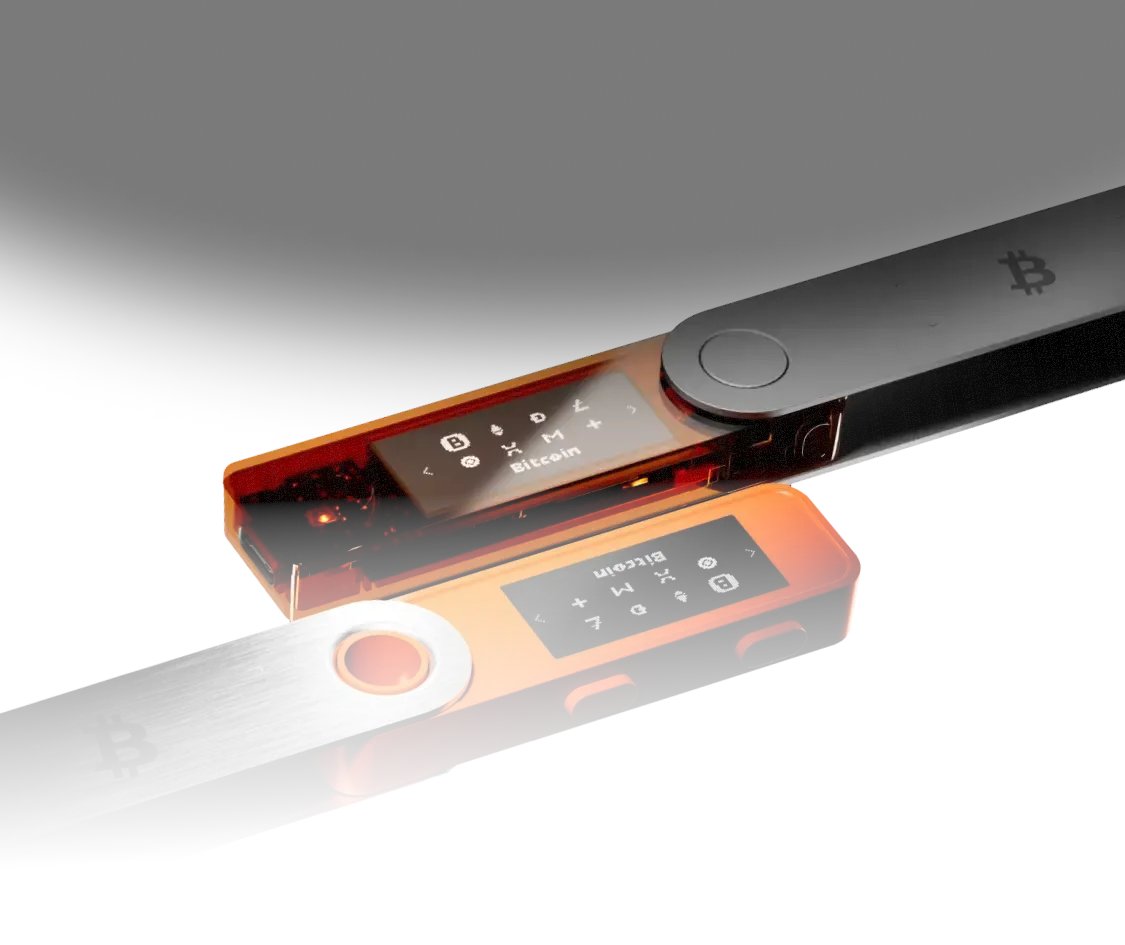
- Hardware wallets
- Air‑gapped devices
- Paper backups (for storage only)
Because the private key is not constantly connected to the internet, cold wallets significantly reduce attack surface.
Simple example:
Now imagine you keep your life savings in a safe at home.
You do not carry it around daily.
It is less convenient to access, but much harder for someone to steal remotely.
A cold wallet works the same way less convenience, much lower exposure.
In simple terms:
Hot wallet = convenience + higher exposure
Cold wallet = security + lower exposure
Many experienced users use both:
- A hot wallet for small amounts and daily activity
- A cold wallet for long-term storage
The distinction is not about different coins.
It is about how and where your private key lives.
Select a scenarioSee the control model and its main trade-off.
How Do People Store Their Private Keys?
There is no single “correct” method. People choose based on how much value they are protecting and how often they need access.
Here are the most common approaches:
1. Written on Paper (Offline Backup)
Many users write their seed phrase on paper and store it in a safe place.
Example: You write the 12 words on paper and keep it in a home safe.
Pros:
- Completely offline
- Not exposed to hackers
Risks:
- Fire, water damage, physical theft
- Someone finding the paper
2. Hardware Wallet (Device Storage)
The private key is generated and stored inside a hardware device.
Example: You confirm transactions on a small physical device that signs internally.
Pros:
- Strong protection against malware
- Good for larger amounts
Risks:
- Losing the device (you still need the seed backup)
- Buying from untrusted sources
3. Encrypted Digital Storage
Some users store their seed phrase in an encrypted password manager.
Pros:
- Convenient
- Easy to back up
Risks:
- Cloud compromise
- Weak master password
This method is controversial. It trades some security for convenience.
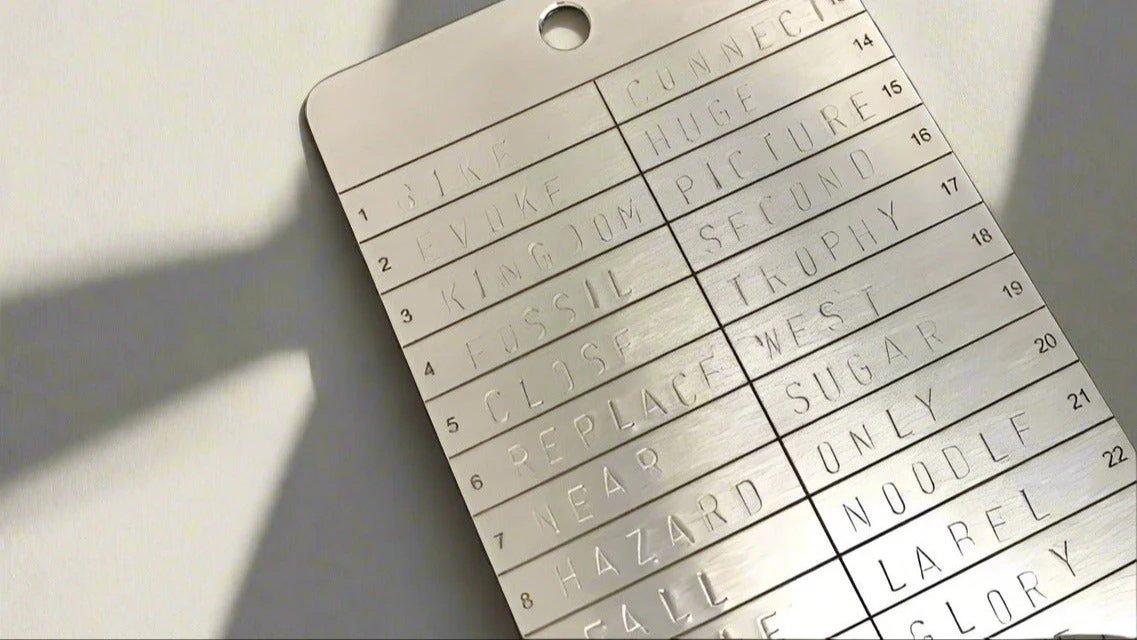
4. Metal Backup Plates
Some users engrave their seed phrase into metal plates.
Example: Instead of paper, you use a fire-resistant metal backup stored in a secure location.
Pros:
- Resistant to fire and water
- Long-term durability
Risks:
- Physical discovery
- Improper storage
5. Split Storage (Advanced Users)
Some people split their seed phrase into parts and store them in separate locations.
Example: Half at home, half in a safety deposit box.
Pros:
- Reduces single-point physical risk
Risks:
- Losing one part
- Overcomplicating recovery
The most important principle is this:
Your private key (or seed phrase) must be protected from both:
- Remote digital attacks
- Physical access by other people
Most large losses happen not because someone guessed a key but because it was stored carelessly.
Recovery and Finality
If you lose access to your device but still have your seed phrase, you can restore your wallet.
If you lose your seed phrase, access is permanently lost.
There is no password reset.
There is no recovery email.
RECOVERABLESEED LOST
ACCESS LOSTWRONG ADDRESS
IRREVERSIBLE
If you send funds to the wrong address, the network will not reverse it.
Finality is absolute.
This is the trade-off for removing intermediaries.
Wallets and Identity
Wallets are pseudonymous.
They are not automatically linked to your legal identity.
However, all activity is publicly visible on the blockchain.
Addresses can be analyzed.
Transaction history is permanent.
Decentralization does not mean invisibility.
Common Beginner Mistakes
Security failures usually happen before a hack.
They happen during careless signing.
Security Discipline Principles
- Never share your seed phrase
- Never enter your seed phrase into a website
- Verify URLs before connecting your wallet
- Review and revoke old approvals periodically
- Use hardware wallets for larger amounts
- Keep backups offline and physically secure
- Assume every signature matters
If you cannot explain what a signature does, do not approve it.
Wallet as a Cryptographic Identity Layer
A wallet is more than a storage tool.It is your cryptographic identity layer.
A wallet is:
- Identity
- Authorization engine
- Permission manager
- Signature device
It is how the network recognizes and interacts with you.
Misunderstanding this layer makes every future DeFi interaction riskier.
Why This Matters Before DeFi
Every DeFi interaction begins with a wallet signature.
- Lending
- Swapping
- Providing liquidity
- Bridging assets
- Governance voting
All require private key authorization.
If you do not understand wallet mechanics, you do not understand risk.
Ownership in crypto is mathematical.
Summary
A crypto wallet does not store coins.
It stores private keys.
Private keys generate signatures.
Signatures authorize transactions.
Seed phrases regenerate private keys.
Whoever controls the seed phrase controls the wallet.
Approvals grant delegated authority.
Hardware wallets isolate private keys.
Security failures are usually behavioral.
There is no recovery if keys are lost.
In decentralized finance, control and responsibility are inseparable.
Understanding wallets is understanding ownership.
Control comes first.
Execution comes next.
In the future, account abstraction may change how wallets manage signing authority, but the underlying principle remains the same:
Control equals signature authority.
A wallet is not a product. It is a cryptographic contract between you and the network. If you misunderstand it, every future DeFi interaction becomes riskier.
In the next article, we will move from control to execution understanding how blockchain transactions are validated, why gas exists, why signatures cost money, and why some transactions fail.Continue the seriesPart 03 · How Blockchain Transactions Actually Work →
Originally published on X · 2026-02-25
 Post on X
 Telegram
The Real Risk: Social Engineering
Most losses do not happen because cryptography fails.
They happen because humans are manipulated.
Common attack patterns include:
The blockchain cannot detect deception.
It only verifies signatures.
Security is behavioral as well as technical.