
Liquidation risk is a moving ratio, not a fixed warning.
Connect collateral value, debt, LTV and health factor so you can see how a position approaches liquidation.
In the previous article, we covered the basic logic of DeFi lending. We explained that one user can supply assets to a protocol, another user can borrow those assets, borrowers pay interest, and suppliers earn from that borrowing demand.
We also introduced one important point: borrowing in DeFi usually requires collateral.
In simple terms, before you borrow, you first deposit an asset into the protocol. Then, based on the value of that asset, the protocol allows you to borrow another asset.
The goal of the previous article was simple:
To understand how the lending system works.
The goal of this article is to go one step further:
To understand when a borrow position is healthy, and when it becomes risky.
Let’s start with a simple example.
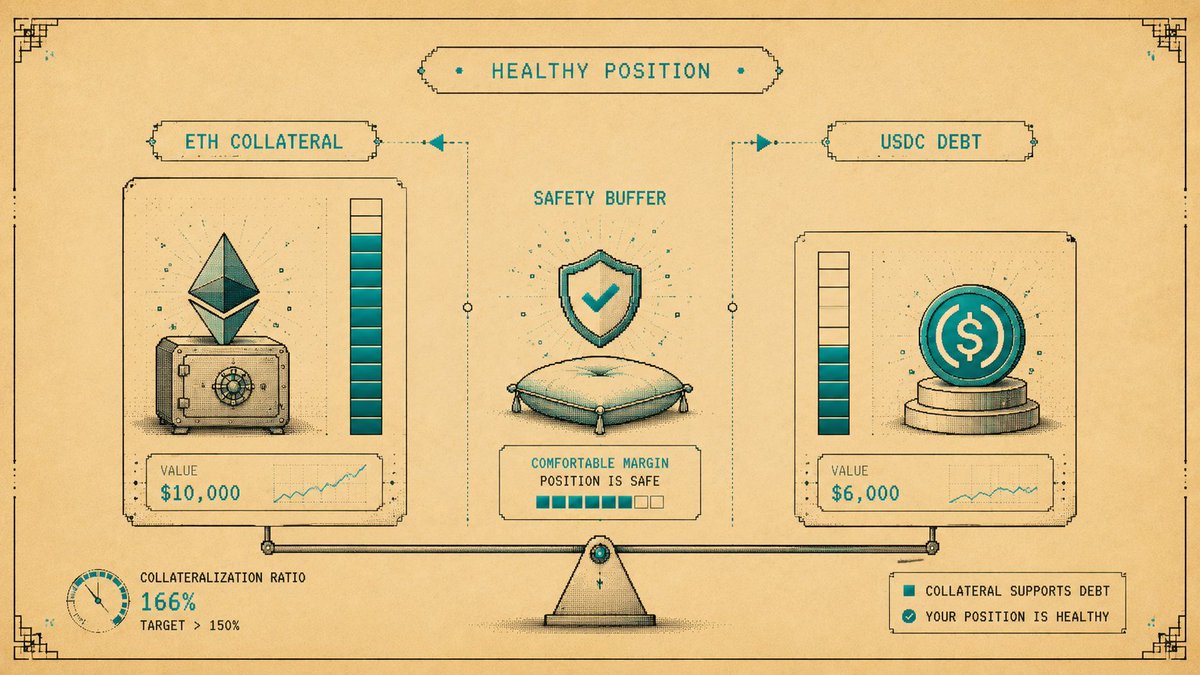
You deposit $10,000 worth of ETH.
Then you borrow 3,000 USDC.
At first glance, this position looks safe because your collateral is worth much more than your debt. But if the market moves, this balance can change.
If ETH drops, your collateral value falls. Your debt, however, stays roughly the same.
This is where the real lending risk begins.
So the new question is:
How does the protocol decide whether your position is still safe?
That is what this article is about.
In this article, we will focus on three main concepts:
LTV: Shows how much you have borrowed compared to your collateral.
Health Factor: Shows how healthy your borrow position is.
Liquidation: Shows what happens if your position becomes unhealthy.
Lesson mapNavigate this lessonExplore all 20 sections
See the model before the details.
Use the flow, the health-factor simulator and the comparison table as a map while you read.
- 01Collateral value
- 02Borrowed debt
- 03Oracle prices
- 04Health factor
- 05Liquidation eligibility
Adjust the controls to begin.
| Metric | What it answers | Risk direction |
|---|---|---|
| LTV | How much debt exists relative to collateral? | Higher means less buffer |
| Maximum LTV | How much can be borrowed initially? | Limit for new borrowing |
| Liquidation threshold | When can liquidation begin? | Crossing it creates eligibility |
| Health factor | How much safety remains now? | Falling toward 1 increases danger |
Why This Topic Matters
The biggest mistake beginners make in DeFi lending is treating borrowing as a one-time action.
They think: I deposited collateral, borrowed stablecoins, and now I can leave the position open.
But a borrow position is not static. Market prices change, interest rates change, oracle prices update, and protocol risk parameters can change over time.
Even if you do nothing, your position can become riskier.
This is the part many beginners miss.
In DeFi, the protocol does not know who you are. It does not care about your intention. It does not know that you planned to repay tomorrow, or that you were about to add more collateral.
The protocol only looks at numbers:
- Collateral value.
- Debt value.
- Risk parameters.
If those numbers move into the danger zone, liquidation becomes possible.
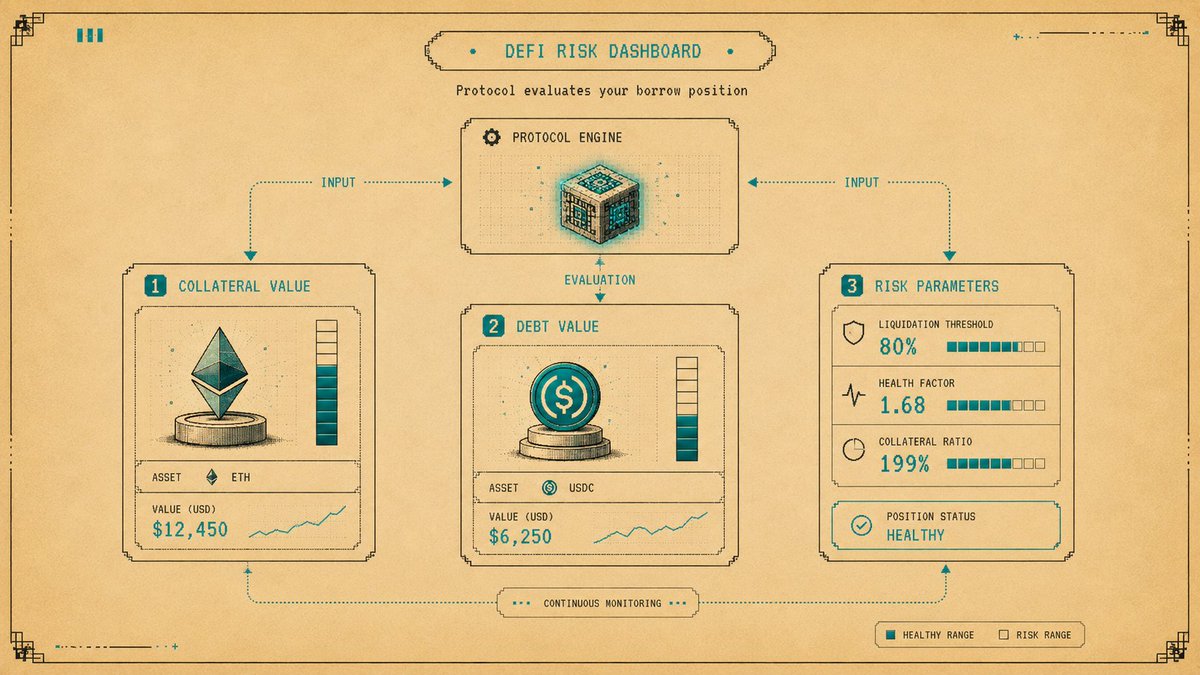
The Basic Lending Position
Every lending position has two sides: collateral and debt.
Collateral is what you deposit into the protocol. Debt is what you borrow from the protocol.
Let’s use a simple example.
You deposit $10,000 worth of ETH and borrow 3,000 USDC.
Your collateral value is $10,000.
Your debt value is $3,000.
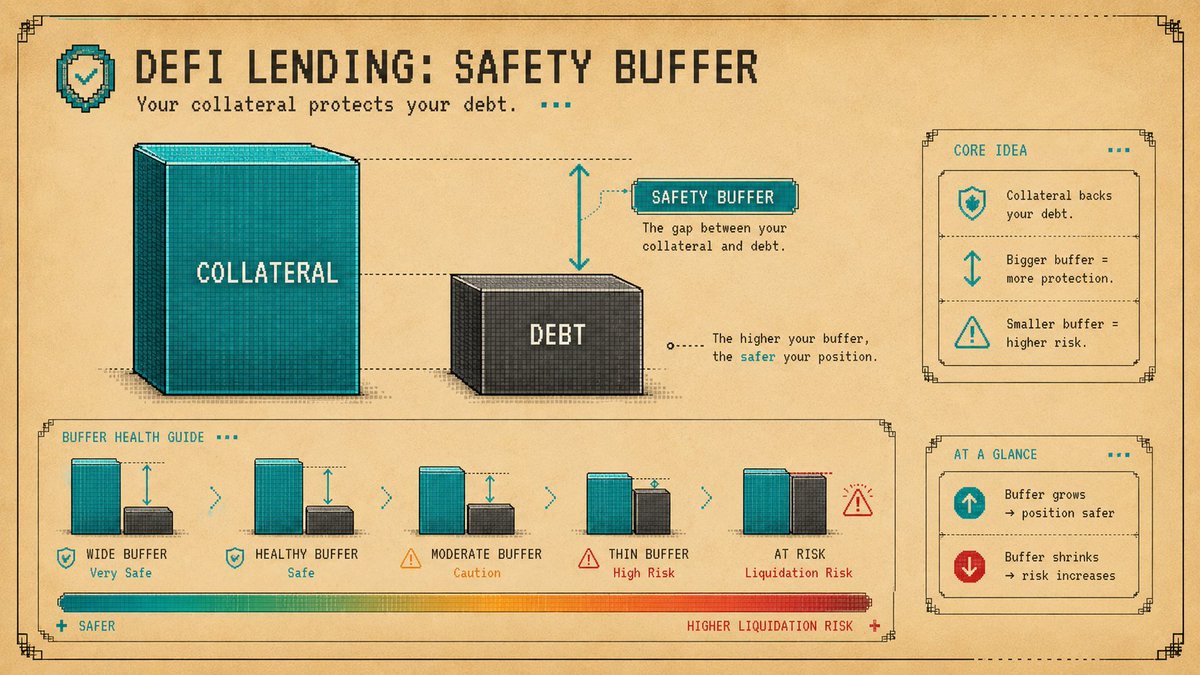
At first glance, this position looks safe because your collateral is much larger than your debt. The difference between the two is your safety buffer.
The smaller this buffer becomes, the closer you move toward liquidation.
The core mental model is this:
DeFi borrowing is not only about asking, “How much can I borrow?”
The real question is:
How much room does my position have before it becomes unsafe?
What Is LTV?
LTV means Loan to Value.
In simple terms, it shows how much you have borrowed compared to the value of your collateral.
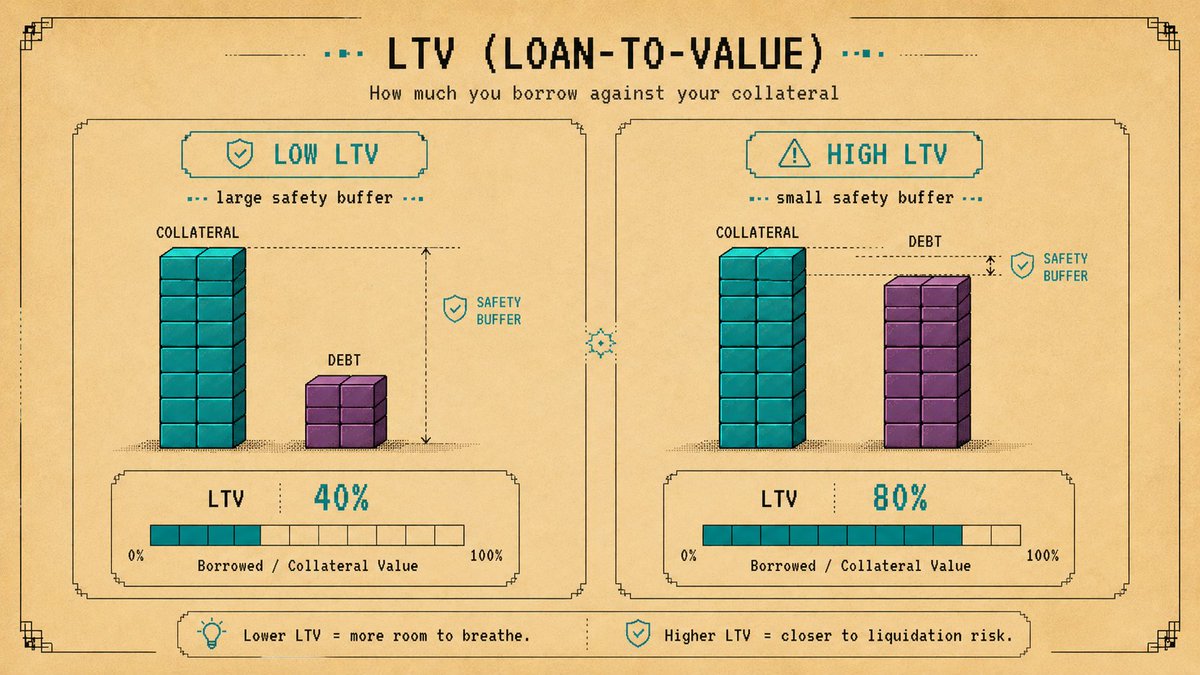
If you deposit $10,000 in collateral and borrow $3,000, your LTV is 30%.
If you deposit $10,000 in collateral and borrow $6,000, your LTV is 60%.
Same collateral. More debt. More risk.
As LTV increases, your position has less room for the market to move against you. A lower LTV gives your position more breathing room. A higher LTV moves you closer to the liquidation zone.
That is why maximum borrow is dangerous.
The protocol may allow you to borrow up to a certain amount. But that does not mean borrowing that full amount is safe.
Maximum borrow is not a target. It is the edge.
Not Every Asset Has the Same Borrowing Power
Protocols do not treat every asset the same way.
$10,000 worth of ETH and $10,000 worth of a low-liquidity token are not the same from a risk perspective.
One may have deeper liquidity and a stronger market structure. The other may fall quickly and become difficult to sell during liquidation.
That is why each asset can have different collateral parameters.
Safer and more liquid assets may provide higher borrowing power. Riskier assets usually have stricter limits.
The important point is this:
When you deposit collateral, you are not just depositing dollar value. You are depositing a specific asset with its own volatility, liquidity, and risk profile.
That is why two assets with the same dollar value may not mean the same thing to the protocol.
Maximum LTV vs Liquidation Threshold
Beginners often confuse these two concepts.
Maximum LTV shows how much you are allowed to borrow.
Liquidation threshold shows when your position becomes unhealthy enough to be liquidated.
They are related, but they are not the same thing.
The important idea is simple:
There is a borrow limit. There is a liquidation line. Your job is not to sit close to either one.
Good risk management means leaving enough room so that normal market movement does not break your position.
What Is Health Factor?
Health Factor is one of the easiest ways to read the risk of a borrow position.
Most lending protocols show it directly.
The exact formula can vary from protocol to protocol, but the beginner mental model is simple.
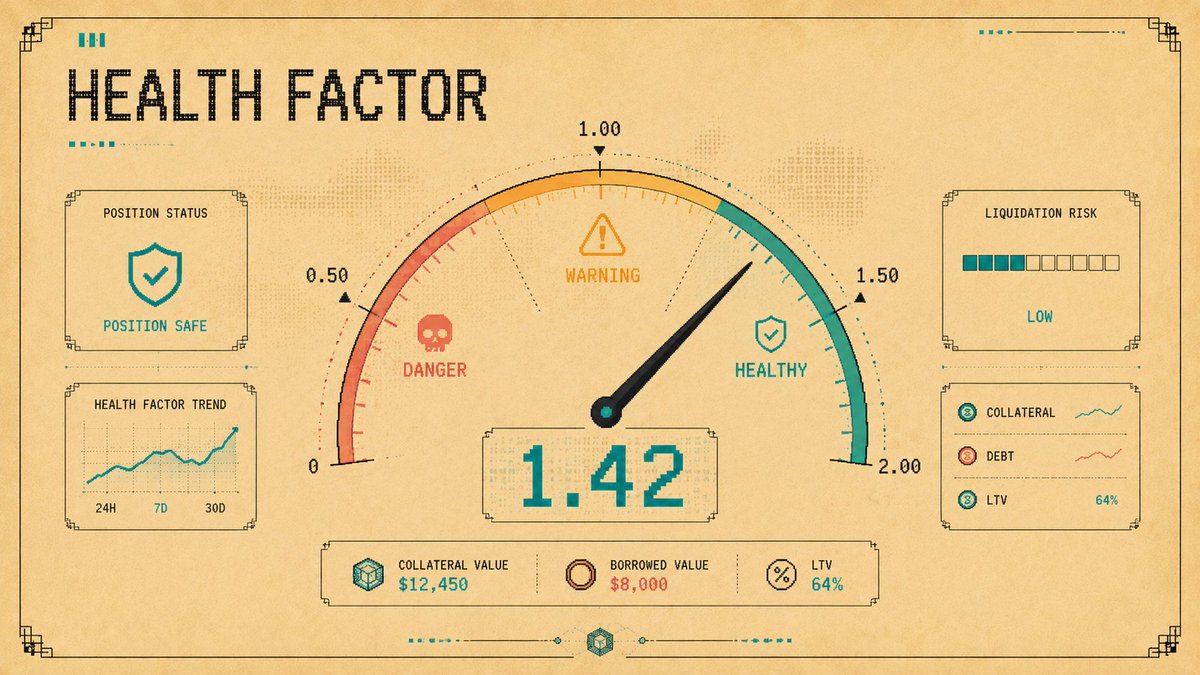
If Health Factor is above 1, the position is still healthy.
If Health Factor gets close to 1, the danger increases.
If Health Factor falls below 1, liquidation can happen.
This is one of the most important numbers in DeFi lending.
Not APY.
Not total supplied.
Not total borrowed.
Health Factor.
Because if you borrow, this is the main signal that shows how close you are to liquidation.
Why Does Health Factor Change?
A borrow position can become riskier even if you do nothing.
Example:
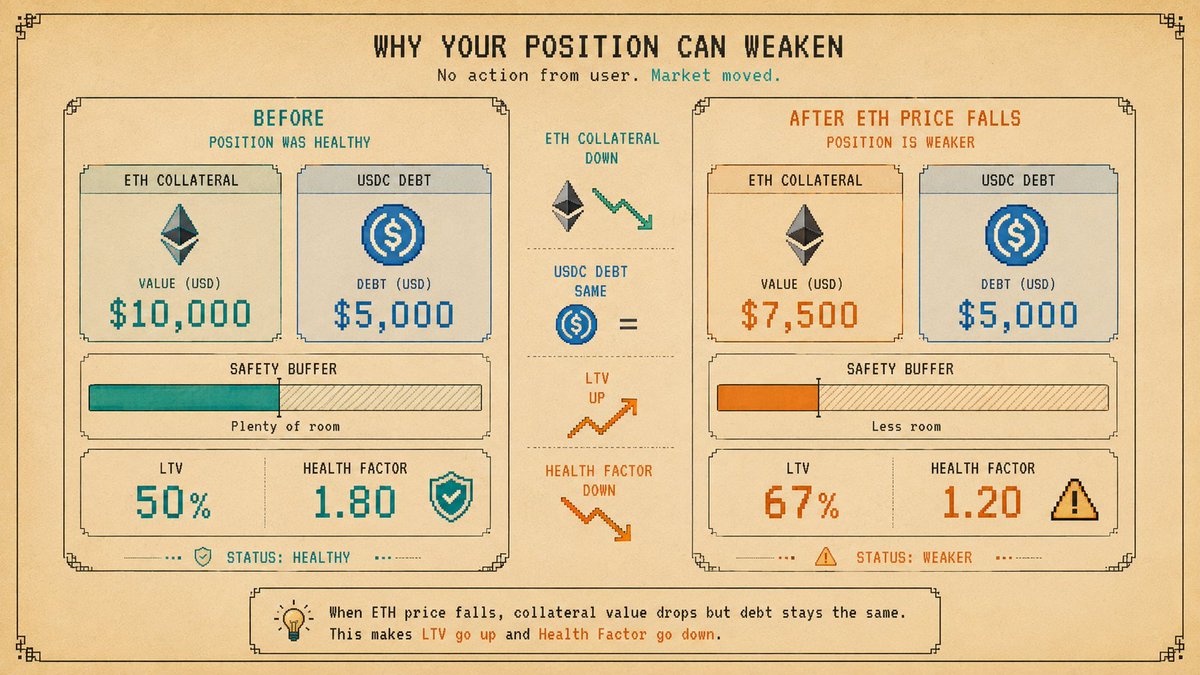
You deposit ETH as collateral and borrow USDC.
If ETH price falls, your collateral value decreases. But your debt stays roughly the same.
The result is simple: your LTV rises and your Health Factor falls.
You did not borrow more. You did not make a new trade. But your position became more dangerous.
This is where the difference between holding and borrowing begins.
If you simply hold ETH and ETH drops, your portfolio loses value.
But if you borrow against ETH and ETH drops, your portfolio loses value and your liquidation risk increases at the same time.
Debt adds fragility to the position.
The Debt Side Can Also Create Risk
Most people only think risk comes from collateral falling.
That is true, but incomplete.
The asset you borrow can also increase in value.
If you borrow a volatile asset and that asset goes up, your debt becomes larger in dollar terms.
Example:
You deposit USDC as collateral and borrow ETH.
If ETH price rises, the value of your debt rises. That makes your position riskier.
So liquidation risk can come from two directions:
Your collateral value can fall.
Or your debt value can rise.
This is why borrowing stablecoins is usually easier for beginners to understand. But stablecoin debt is still not risk-free.
If your collateral falls enough, you can still be liquidated even with stablecoin debt.
What Is Liquidation?
Liquidation is the protocol’s defense mechanism.
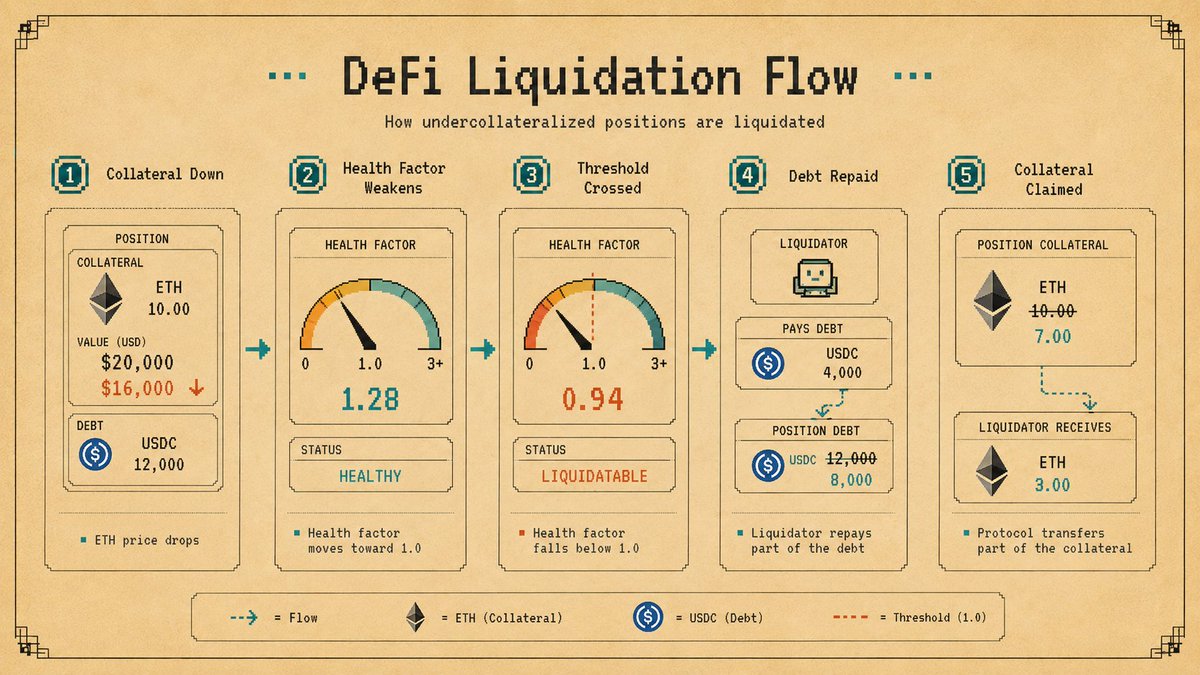
If your position becomes too risky, the protocol allows liquidators to repay part of your debt and receive part of your collateral in return.
A liquidator is usually a bot or a professional market participant. They monitor unhealthy positions and act when a position crosses the liquidation line.
They repay part of the debt, receive collateral, and earn a liquidation bonus for doing it.
This keeps the lending protocol solvent.
Without liquidation, some borrow positions could become undercollateralized. That means the debt could become larger than the collateral.
When that happens, bad debt is created.
Bad debt puts suppliers and the protocol at risk.
That is why liquidation is not a bug.
It is a core part of the system.
Liquidation Is Not Personal
This point matters.
The protocol is not punishing you.
It is protecting the system.
DeFi lending is not built on identity, legal contracts, or personal trust. It is built on collateral rules.
If your position becomes unhealthy, the protocol acts according to those rules.
It does not wait for you. It does not negotiate. It does not care whether the market drop is temporary.
That is why liquidation risk should be managed before the position becomes dangerous.
Liquidation Penalty
Liquidation usually includes an extra cost.
The liquidator receives an incentive for taking action, and that incentive comes from the borrower’s collateral.
That is why getting liquidated is worse than calmly managing the position yourself.
If you reduce debt early, you choose the timing. If you add collateral early, you control the action.
But if liquidation happens, the system controls the action.
And the system’s priority is not giving you the best exit price. Its priority is protecting solvency.
Why Oracle Price Matters
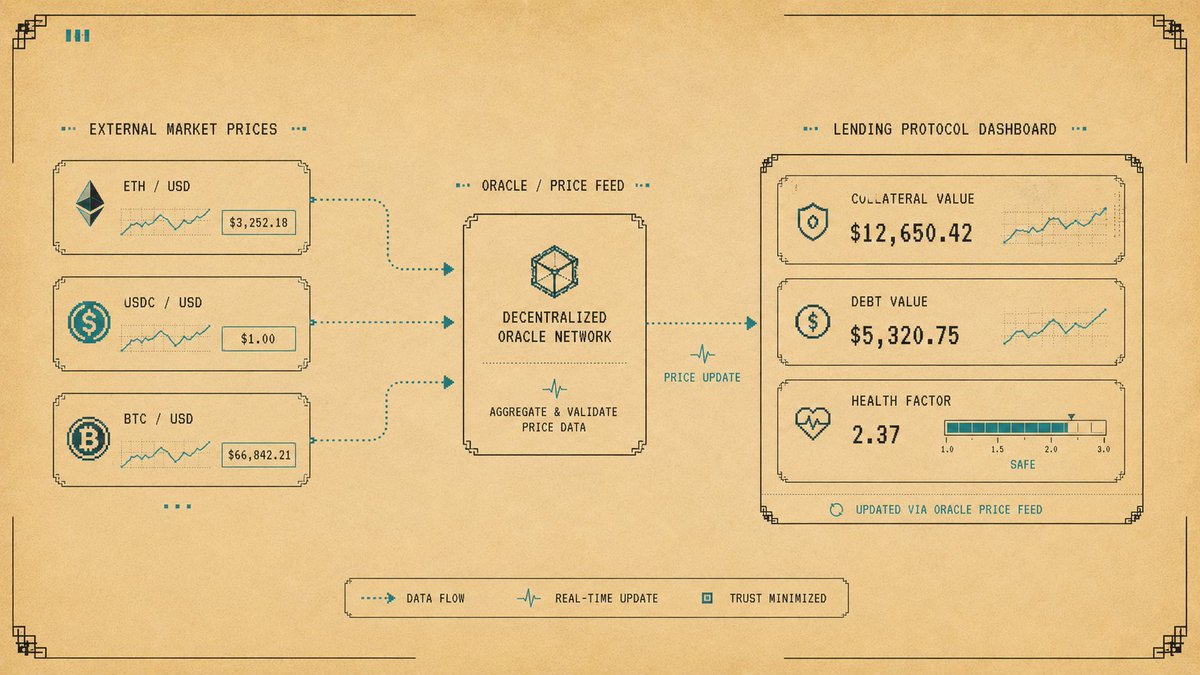
Lending protocols need price data.
They need to know how much your collateral is worth and how much your debt is worth.
For this, they use oracles.
An oracle is a system that brings external price data into the protocol.
The important point is this:
Your position is evaluated based on the price source used by the protocol.
Not based on a random chart you saw. Not based on your feelings. Not necessarily based on the price shown on one specific exchange.
During volatile periods, oracle updates can change your Health Factor quickly.
That is why fast market moves are dangerous for borrowers. By the time you notice the move, the protocol may already see your position as risky.
A Simple Example
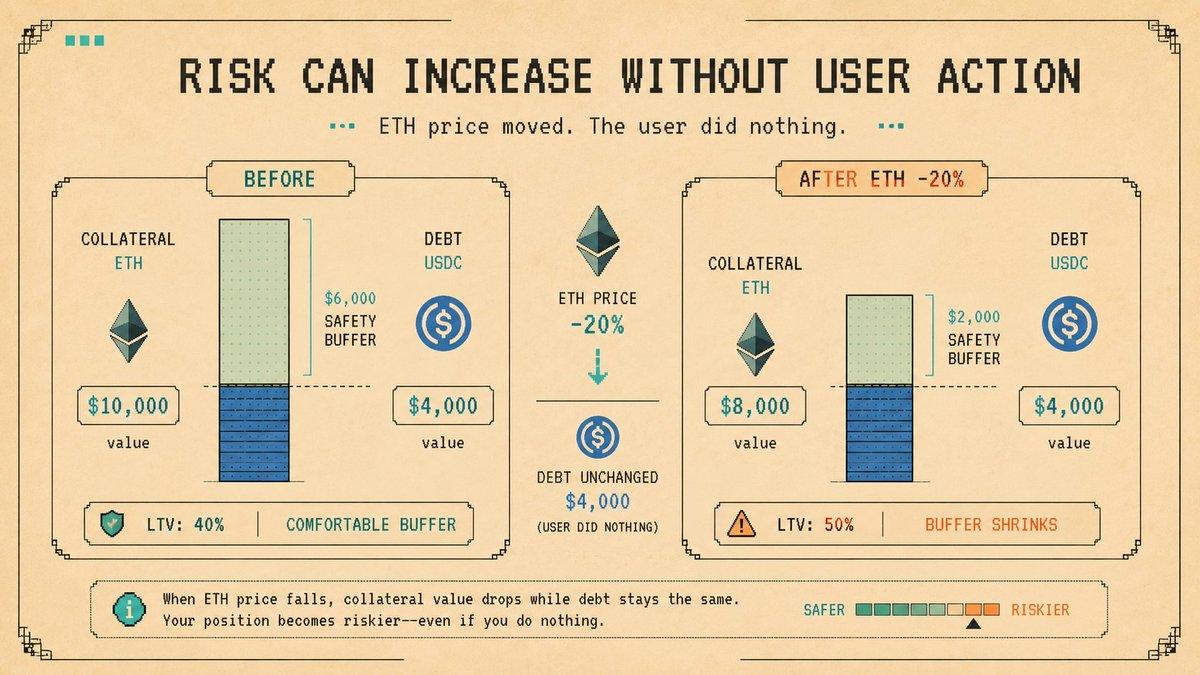
You deposit $10,000 worth of ETH.
You borrow 4,000 USDC.
Choose an option to begin.
Your LTV is 40%.
Now ETH drops 20%.
Your collateral is no longer worth $10,000.
It is worth $8,000.
Your debt is still around $4,000.
Your new LTV is 50%.
You did nothing, but your risk increased.
If ETH keeps falling, your collateral buffer keeps shrinking. At some point, the position can move closer to the liquidation zone.
That is why a borrow position requires monitoring.
It is not enough for the position to be safe when you open it. It needs to remain safe over time.
The Dangerous Beginner Thought
Many users think:
“If risk increases, I will just add more collateral.”
Sometimes that works.
But it is not a real plan.
Crypto markets are open 24/7. You may be sleeping. Gas fees may spike. The network may become congested. Your transaction may fail. The interface may be slow. Price may move faster than you can react.
That is why the safer plan is not:
“I will fix it later.”
The safer plan is:
“I will not let the position get too close to the danger line.”
How to Reduce Liquidation Risk
The real options are limited.
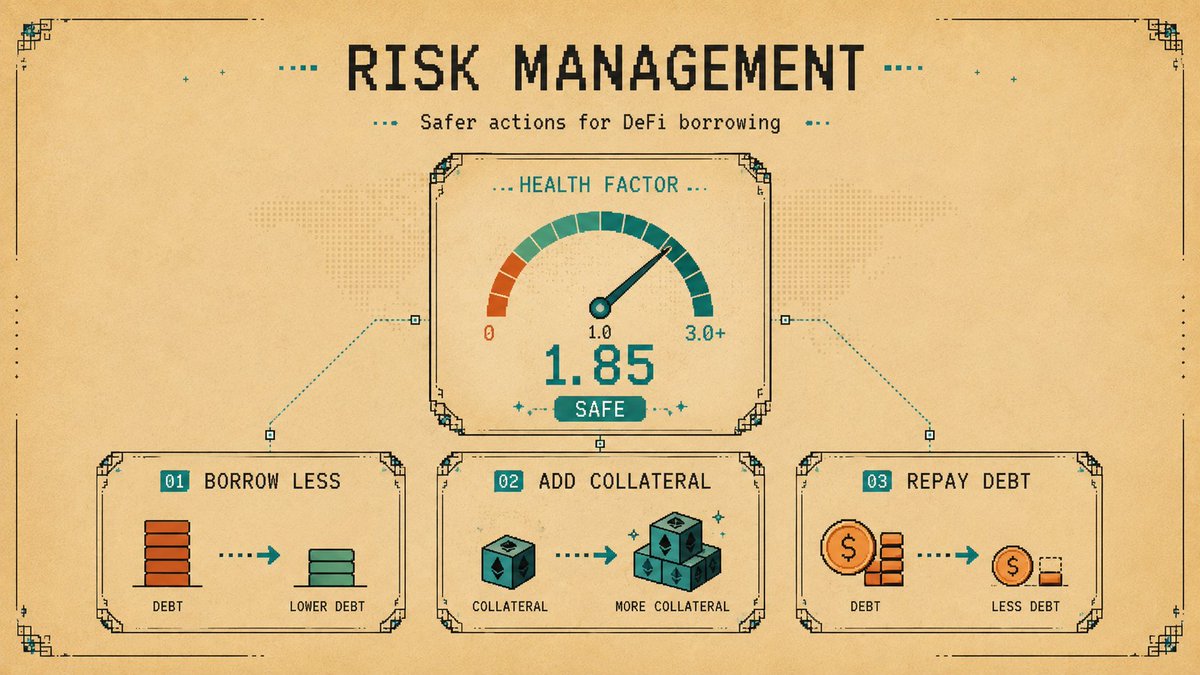
- Borrow less.
- Add more collateral.
- Repay part of the debt.
- Use less volatile collateral.
- Avoid borrowing volatile assets unless you clearly understand the risk.
- Track your Health Factor.
- Have an exit plan before opening the borrow position.
The main idea is simple:
Do not try to manage liquidation risk at the liquidation line.
Manage it long before you get there.
Common Beginner Mistakes
Borrowing Checklist
Before borrowing, ask yourself:
- What am I using as collateral?
- How volatile is this collateral?
- What am I borrowing?
- Can the borrowed asset move against me?
- What is my current LTV?
- What is my Health Factor?
- How far am I from liquidation?
- What happens if my collateral drops 20%?
- What happens if it drops 40%?
- How will I repay?
- Can I monitor this position?
- What is my exit plan?
If you cannot answer these clearly, you may not be ready to borrow.
Supplying already carries risk.
Borrowing adds a second layer of risk on top of that.
Core Insight
A borrow position is not just:
“I deposited collateral and borrowed.”
The better mental model is:
“I opened a collateralized debt position that needs to stay healthy over time.”
That difference matters.
Collateralized means your debt is backed by assets.
Debt means you have an obligation.
Position means it changes over time.
Healthy means the protocol is constantly measuring it.
Over time means the risk does not end after the transaction confirms.
This is the correct mental model.
Borrowing is not dangerous just because the button exists.
Borrowing becomes dangerous when users ignore the moving relationship between collateral and debt.
One Minute Summary For Lazies
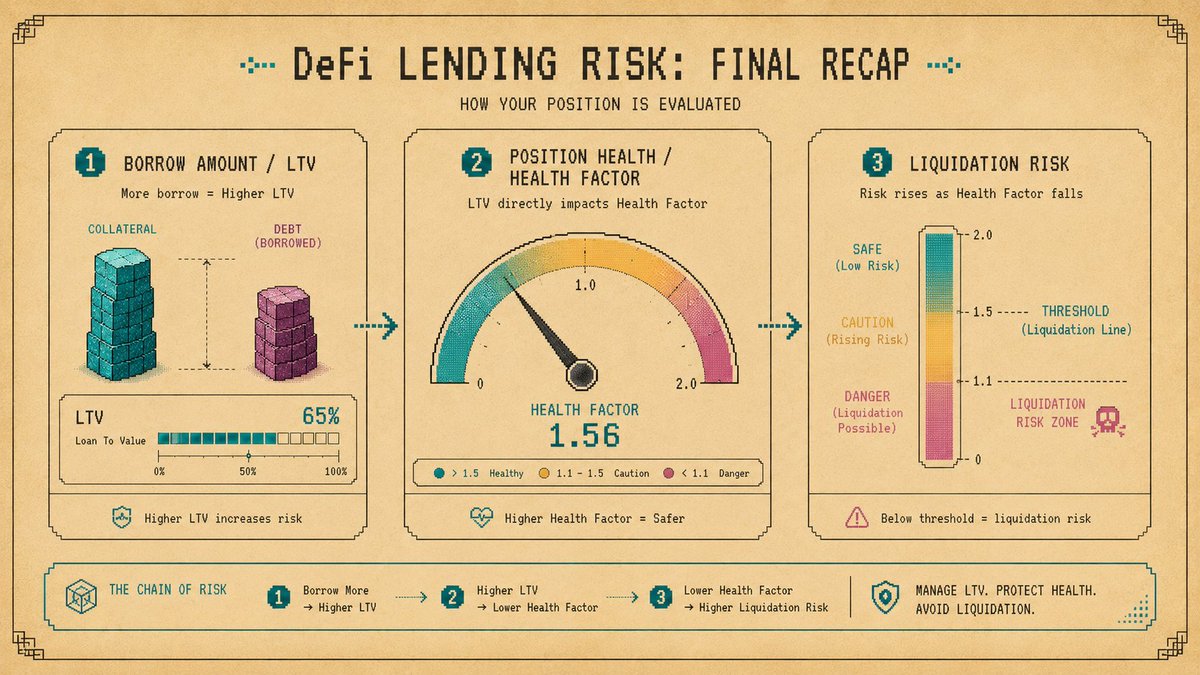
LTV shows how much you have borrowed compared to your collateral value. As LTV rises, your safety buffer gets smaller. Health Factor shows whether your borrow position is still healthy. When it gets close to 1, liquidation risk becomes serious. If it drops below 1, your collateral can be liquidated.
Liquidation is not personal. It is the protocol’s mechanism for preventing bad debt. The safest borrowers do not borrow the maximum. They keep distance, monitor their position, and have a plan before the market moves.
Can you explain the model?
Can health factor fall even if collateral price is unchanged?
Yes. Borrowed-asset appreciation or accumulating interest can increase the debt side.
Is liquidation a manual punishment?
No. It is automated risk management defined by protocol rules and oracle prices.
What’s Next?
Now we understand the collateral side of lending.
We know what LTV means. We know why Health Factor matters. We know how liquidation works.
But borrowing has another moving part:
Interest.
In other words, the cost of debt.
Borrowing cost does not have to stay fixed after you open a position. It can change based on supply, demand, and utilization.
That is what we will cover in the next article:
How Interest Rates Work in DeFi Lending Protocols.
Because in lending, liquidation is not the only risk.
The cost of debt can also rise over time.
Originally published on X · 2026-05-23
 Post on X
 Telegram